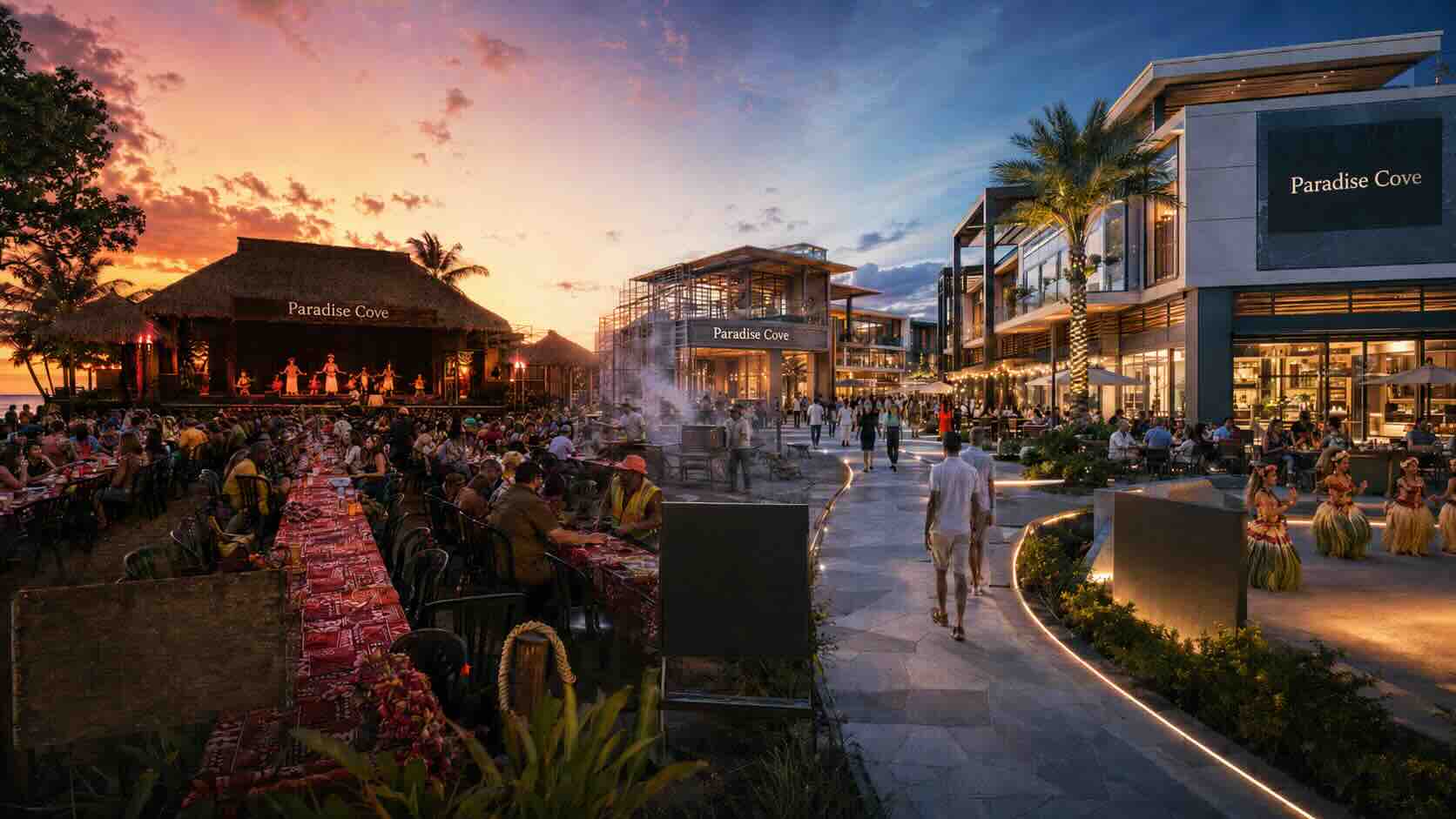
Back in January, we mentioned the closure of Paradise Cove, and last week, I was surprised to come across a Washington Post feature story on the iconic Ko Olina Luau. The story framed Paradise Cove as a victim of the tourism ecosystem it helped create: Ko Olina grew into a luxury powerhouse, land values exploded, and eventually a massive middle-market luau stopped penciling out.
I came across the article as I was back in my hometown of New York City for meetings and conferences, walking through old neighborhoods that barely resemble the city I grew up in. Some changes are better. Some are worse. Either way, the city I knew is very different.
Reading about Paradise Cove, I felt that same mix of nostalgia, sadness, and reluctant acceptance. Places evolve. Consumer tastes change. Economics change. What once made perfect sense can eventually become impossible to sustain.
The Paradise Cove site is now slated for a $135M redevelopment with retail, restaurants, entertainment space, and a smaller luau component. In other words: less mass-market tourism, more upscale mixed-use “experience economy.”
It is hard not to see the broader trend. We have talked many times about the desire to attract “higher-spending visitors.” Well, this is what that strategy starts looking like on the ground: fewer large-scale middle-market attractions, more luxury positioning, higher land values, higher operating costs, and pricier experiences.
Hawaiʻi’s cost of living is brutal. Employees need higher pay to survive. Owners want stronger returns on increasingly expensive assets. Guests are already pushing back on rising prices, fees, and shrinking value. That three-legged stool is wobbling again. More on that below.
Paradise Cove will not be the last example. Progress always has a cost. The hard part is admitting that some of the places we’re nostalgic for were already changing long before we were ready to let them go.