

Aloha {{first name |}}!
Last month felt like a game of hospitality musical chairs, with executives changing roles across the islands. This month is less about who’s moving where and more about where the industry itself is moving. From HTA’s CEO search and Maui’s evolving vacation rental landscape to Google’s AI ambitions and Hilton’s latest owner initiatives, there’s plenty to unpack.
Before we dive in, a big mahalo to this month’s sponsor, Amadeus. With solutions across the guest journey, Amadeus helps hotels stay visible, capture demand, optimize operations, and deliver exceptional guest experiences through a connected, AI-powered ecosystem.
🎉 We’ve got two giveaways for the Hui this month!
-
2 complimentary tickets to hear Kelly Sanders, President of Highgate Hawaiʻi, discuss the business behind Hawaiʻi hotels at this CCIM-sponsored luncheon. Email dan@hawaiihotelhui.com with Kelly in the subject line. The first two emails win!
-
2 complimentary registrations to Holly Zoba’s hands-on AI workshop for hotel professionals. Email dan@hawaiihotelhui.com with Holly in the subject line. The first two emails win!
The latest HHH Monthly Market Report is here. Published on the first Tuesday of each month, it summarizes key hotel data with actionable context. Click below to sound like a pro in your next meeting 😉
Not already a subscriber? Join the Hui and get the signal sent straight to you; it’s free. Already subscribed? Forward this to someone in Hawaiʻi hospitality who should be reading it.
Want to reach Hawaiʻi’s hotel leadership? Our readers are decision-makers at properties, management companies, ownership, and brands across the islands. Sponsorship inquiries: dan@sassato.com
Mahalo for reading, and as always, thank you for being part of the Hui.
Let’s dive in.
Mahalo,

Dan Wacksman
Hawaiʻi Hotel Hui Insider Editor-in-Chief 😄

Help Wanted: HTA CEO

Back in June, we compared the salary to local GM and managing director positions and wondered why someone would trade a stable executive role for a position for less money with more politics, more scrutiny, and less security. Judging by the applicant pool, plenty of executives reached the same conclusion.
When HTA reopened its CEO search, we wondered who would sign up for what might be the most politically exposed job in Hawaiʻi. The position had less independence than ever, a salary well below what many experienced hotel executives earn, and a governance structure that seemed designed to ensure everyone had a say except the person actually doing the job.
The numbers tell the story. About 60 people applied. Roughly one-third didn’t even meet the minimum qualifications, leaving around 40 viable candidates. Compare that with more than 300 applicants during the John De Fries search.
To be fair, the salary has since been raised to $216,000 plus state benefits, but that still falls well below what many seasoned hotel executives, destination leaders, and tourism CEOs earn.
The salary, though, isn’t the whole story. The real issue is uncertainty. Over the last few years, HTA has lost much of its independence, gone through repeated leadership changes, faced annual legislative restructuring efforts, and watched CEOs become political lightning rods. That’s a tough sell for someone already leading a successful organization.
The irony is that lawmakers now say they’re looking for stability. Stability is exactly what many qualified candidates are looking for too.
Did you know an octopus has Nine Brains? I didn’t.

Four years after taking over the ground lease for the former Kona Seaside Hotel, Nine Brains has purchased the fee-simple interest in Pacific 19 Kona for $23 million. The deal completes a strategy that began in 2022 when the firm acquired the leasehold and transformed the property into Pacific 19.
If you’re wondering, “Who exactly is Nine Brains?” so was I. According to its website, Nine Brains is a Hawaiʻi-focused hospitality investment firm that takes its name from the octopus, which has nine brains but one purpose. The company says it looks for properties with an “Authenticity of Place” rather than cookie-cutter hotels. Pacific 19 is its first publicly announced investment, but the team behind it brings decades of experience developing, operating, and investing in Hawaiʻi hospitality.
The purchase itself isn’t a huge surprise. Owning the land beneath a hotel is generally a better long-term position than leasing it, particularly in Hawaiʻi where fee-simple hotel opportunities are increasingly scarce.
One last thing. If anyone from Nine Brains happens to read this, you might want to have one of your nine brains take a look at your website. At the time we checked, it was showing as “Not Secure.” We are thinking maybe an expired SSL certificate. If you need some help, I know a guy.
Bring Your Laptop. Leave Smarter.
-Sponsored-
Let’s be honest.
Most AI sessions spend an hour telling you AI is changing the world.
This one actually shows you how to use it.
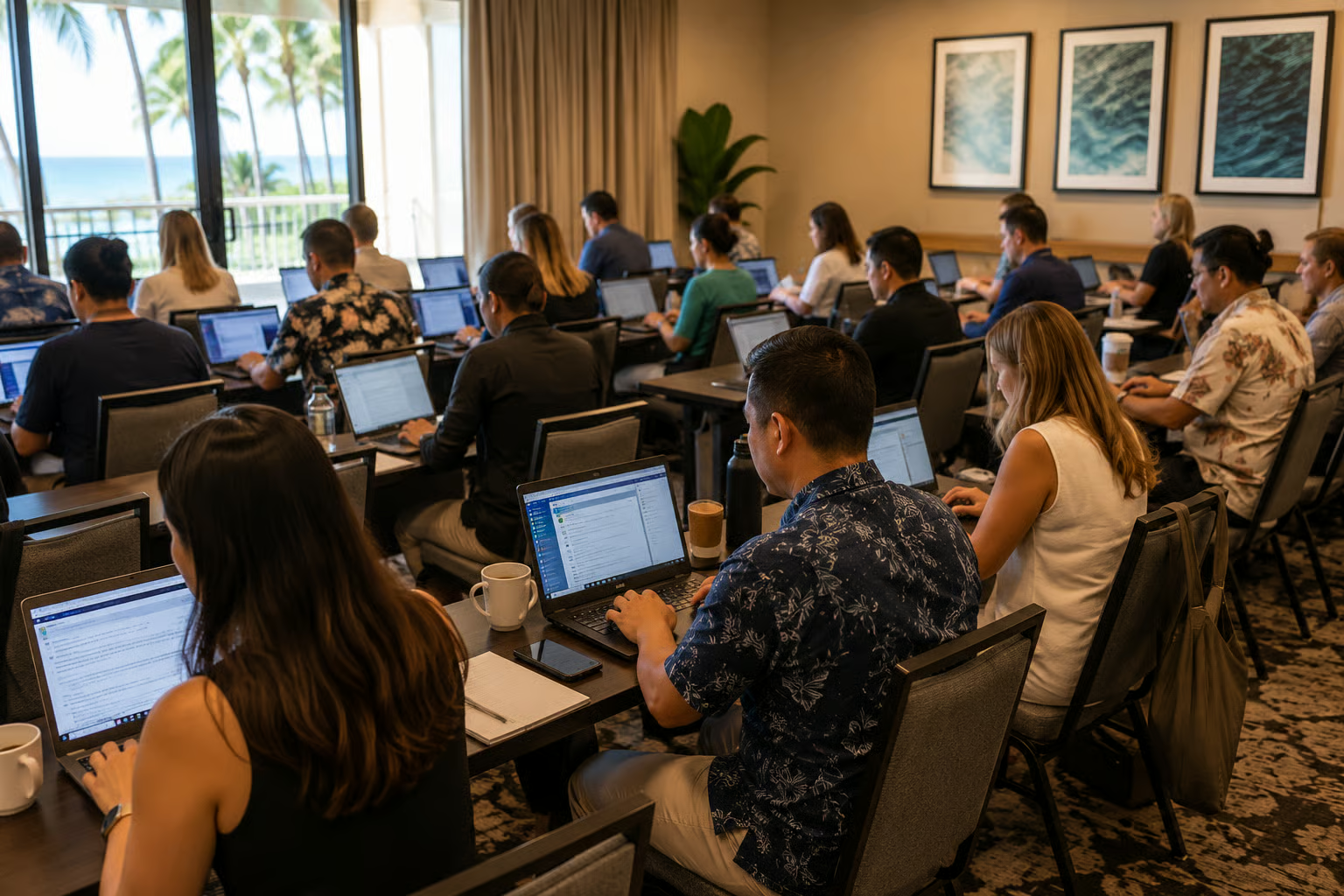
Join nationally recognized hotel AI expert Holly Zoba for a hands-on workshop built specifically for Hawaiʻi hotel teams. You’ll build your own AI assistant, master prompts that actually work, and leave with practical tools you can put to work the same day!
Bring your laptop. Leave with tools you’ll actually use.
Seats are limited, and workshops like this rarely make it to Hawaiʻi.
Presented by HSMAI Hawaiʻi
In partnership with Outrigger Reef Waikīkī Beach Resort and Hawaiʻi Hotel Hui
Thursday, August 20, 2026
9:00 AM–12:00 PM
Outrigger Reef Waikiki Beach Resort
🎉HHH is offering 2 complimentary registrations to this event. Email dan@hawaiihotelhui.com with Holly in the subject line. The first two emails win!
Turtle Bay’s Tiniest Residents Win a Round

Hawaiian yellow-faced bee (Hylaeus anthracinus).
PC: Sheldon Plentovitch, USFWS
In February, we called building in 2026 on the strength of a 2013 environmental study a bold strategy, and suggested the reported $50 million Host Hotels paid for “entitled” land at Turtle Bay might get complicated. Judge Shirley Kawamura agreed. No permits for the 375 hotel and residential units planned on 50 acres at Kawela Bay, the western end of the resort’s holdings, until a supplemental EIS is completed. The reason was two species of endangered Hawaiian yellow-faced bee, nalo meli maoli, federally listed in 2016, three years after the study they were leaning on.
That 2013 study only exists because the Hawaiʻi Supreme Court ruled in 2010 that the 1985 EIS was too old to carry new construction on that same coastline. A court had already decided, on this exact stretch of shoreline, that an aging environmental review cannot be stretched over a new project.
Who could have seen this coming? (tongue firmly in cheek)
The Escape Hatch Opens
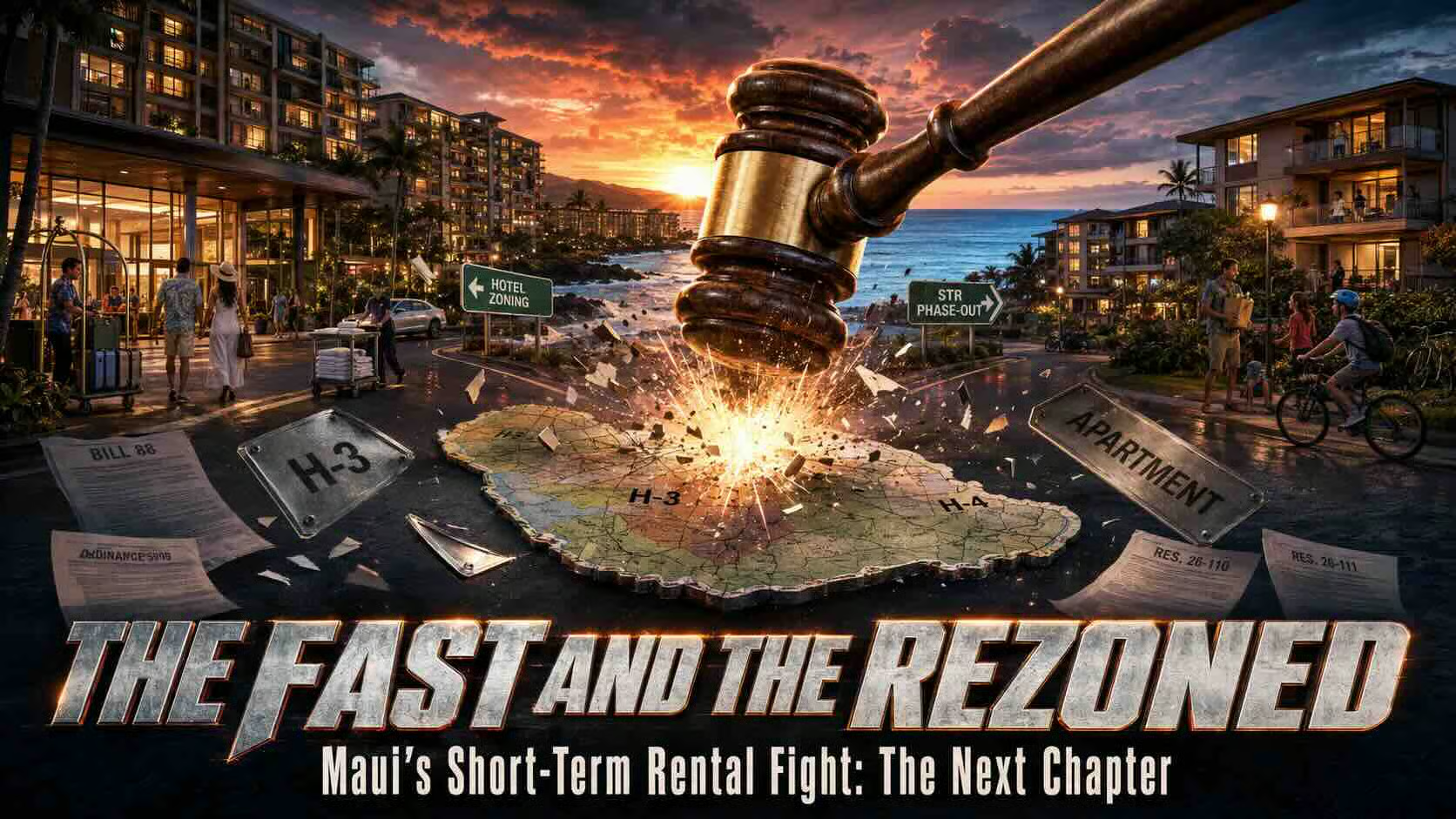
A refresher, because Maui’s condo/vacation rental zoning fight has more sequels than the Fast & Furious franchise. Bill 9 (now Ordinance 5909) phases out more than 6,000 apartment-zoned short-term rentals on the theory that they should return to local housing. In June, the Council created two new hotel zoning categories, H-3 and H-4, that let properties rezoned into them keep renting to visitors (our coverage). That carve-out was originally drawn to spare about 4,500 units. On July 24, the Council nominated 2,056, including a batch it says already operates like hotels, which the bill defines as providing front-desk or similar services, or employing groundskeepers and other staff (Resolution 26-111).
Note what the test actually is. Not zoning. If a front desk and a groundskeeper make it a hotel now, what was it in 2024?
We checked Kalshi for an over/under on how many of the original 6,000+ ever become local housing. Nothing yet.
Hotel Performance
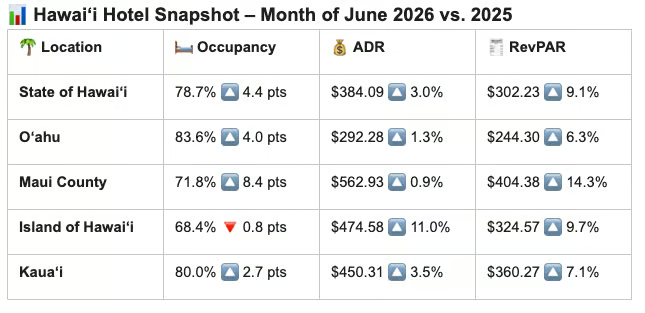
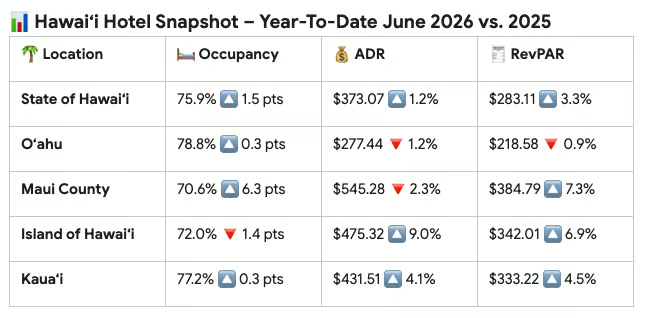
Quick Summary (So You Sound Smart in Meetings): Statewide RevPAR rallied in June with a strong ~9.1% jump, led by a massive bounce-back in Maui and rate hikes on the Big Island. Maui continues to dominate as the clear rate leader at $562+ with RevPAR surging ~14.3% (fueled by an ~8.4 pt jump in occupancy), while the Big Island pushed RevPAR up ~9.7% almost purely through pricing power (ADR up ~11.0%). Kauaʻi delivered another solid month with RevPAR up ~7.1%, and Oʻahu bounced back nicely with RevPAR up ~6.3%, posting the state’s highest occupancy at 83.6%.
HTA and DBEDT publish a lot of great data. We curated the metrics that actually matter to hotel operators, added context, and packaged it into a monthly report.
Click here to sound REALLY smart in your next meeting and download the HHH Market Performance Report.
*Hotel performance data will be published in the first issue of each month.

Two Hilton Stories Made Me Go, “Hmm…”

“Come on in. The water’s fine.”
Two Hilton stories caught my attention this past week. In one, CEO Chris Nassetta defended the company’s 28 brands, insisting each occupies its own “swim lane” and does not cannibalize the others. In the other, Hilton announced fee reductions, AI-driven efficiencies, P&L reviews, and even a more flexible approach to renovations, all aimed at helping owners whose margins are being squeezed by stubborn labor, insurance, energy, and operating costs. Dare we say… brand fees?
Both positions can be true. But together, they raise an interesting question.
Could part of the owner-margin problem be the increasingly crowded brand family itself?
Hilton says every established brand outperforms its local competitive set, which sounds great at the portfolio level. It may feel different to the owner of a Hilton-affiliated hotel watching another Hilton flag open nearby. The two properties may have different lobby furniture, breakfast concepts, and brand adjectives, but they can still compete for the same guests, corporate accounts, employees, development sites, and Honors members.
We’ve discussed brand proliferation before, so this isn’t another “do we really need 28 brands?” rant. The better question is who benefits most from each additional flag. Hilton gains another development vehicle, another fee stream, and another way to keep a deal in-house. Owners may gain a more precisely positioned product, but they may also find themselves competing with another sibling across the street.
To Hilton’s credit, the company is clearly putting more emphasis on owner profitability. Its new RISE initiative could deliver 75 to 100 basis points of savings for qualifying hotels (that’s a fancy way of saying 0.75% to 1.00%), it’s reviewing hotel P&Ls for additional efficiencies, and it’s signaling more flexibility around renovation requirements. Those are meaningful changes. Royalty fees, however, remain untouched, and Hilton’s management and franchise fee revenue still increased 6.4%.
Maybe every brand has its own lane. But from where many owners sit, the pool is starting to look awfully crowded.
Behind the Guest Experience: The Real Estate Economics of Hawaiʻi Hotels
-Sponsored-
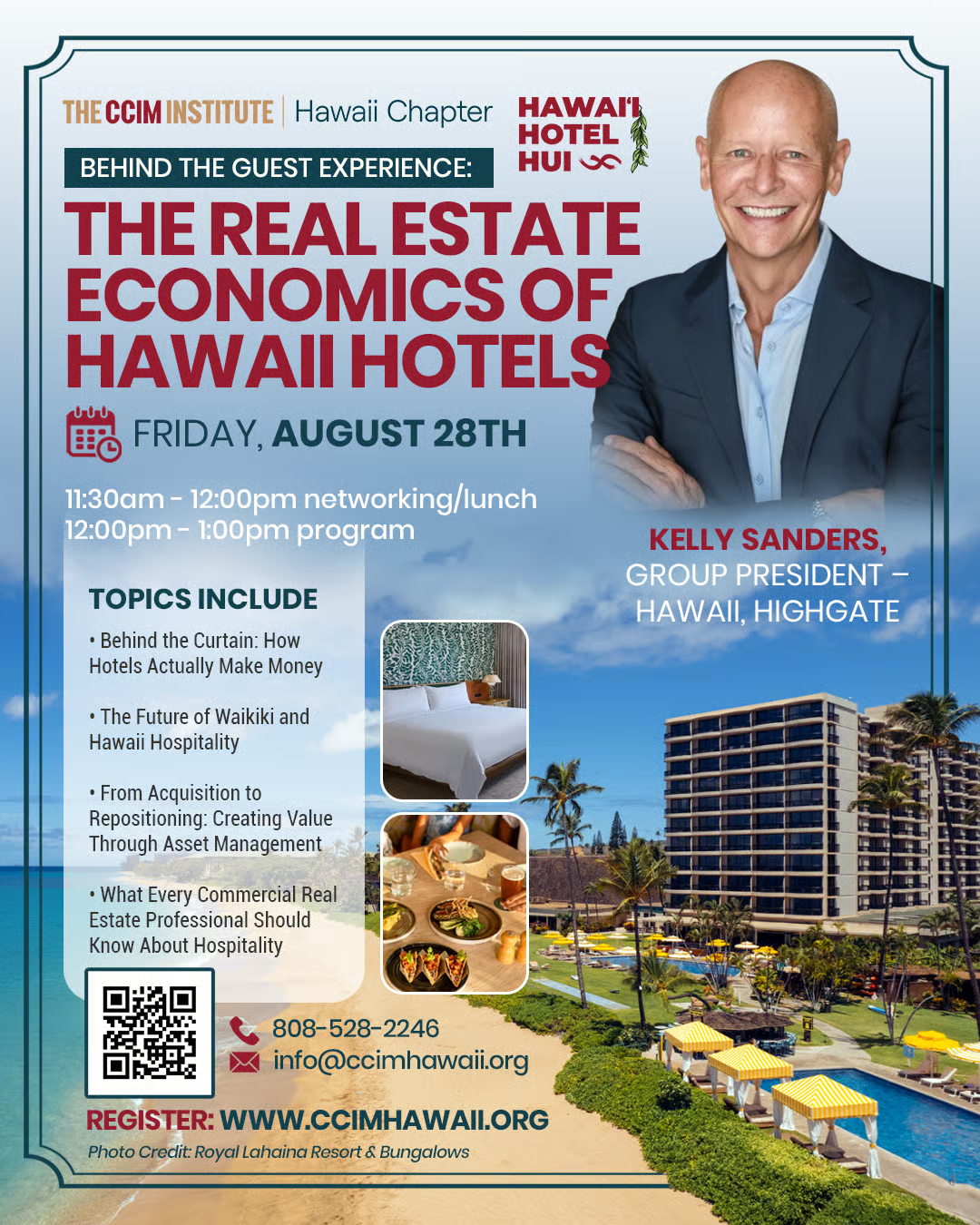
Hotels are more than places to stay. They’re complex real estate investments where ownership, asset management, branding, operations, and market forces all come together.
Join our industry leader, Kelly Sanders, President of Highgate Hawaiʻi, for a candid discussion on what really drives hotel value, profitability, and long-term success in Hawaiʻi. Whether you’re in hospitality, commercial real estate, development, or simply curious about the business behind the guest experience, you’ll walk away with a better understanding of how hotels actually make money and where the industry is headed.
Friday, August 28, 2026
11:30 AM to 1:30 PM
Cafe Julia / Elizabeth Fuller Hall
1040 Richards Street, Honolulu
🎉HHH is offering 2 complimentary registrations to this event. Email dan@hawaiihotelhui.com with Kelly in the subject line. The first two emails win!
They’re Not Buying Resorts. They’re Buying Owners
We don’t cover vacation ownership (AKA timeshare) very often, but maybe we should. Timeshare represents nearly 15% of Hawaiʻi’s visitor lodging inventory, and with occupancies that routinely top 90%, it’s one of the state’s most resilient lodging segments.
So when Travel + Leisure Co. announced its $343 million acquisition of Yes & Vacations and Spinnaker Resorts, adding seven Maui resorts to its portfolio, one quote immediately stood out:
“We’re not buying these companies for the portfolio. We’re buying these companies for the 100,000 owners.”
Unlike hotels, which wake up every morning with empty rooms to sell, vacation ownership companies already have their customers. Owners return year after year, pay maintenance fees, finance purchases, exchange weeks, and often buy more points over time. The real asset isn’t the resort. It’s the relationship.
The acquisition also highlights another reality Hawaiʻi hotel owners know well. Travel + Leisure specifically pointed to Maui as a market where new development has become increasingly difficult, making acquisitions more attractive than building from the ground up.
Time Share By The Numbers (Hawaiʻi 2025)
-
91.9% statewide occupancy compared with 73.9% for Hawaiʻi hotels.
-
863,954 timeshare visitors, a record high and about 9.1% of all visitor arrivals.
-
$173.1 million in state and county taxes paid by participating timeshare properties in 2025.
-
More than 5,000 employees work in Hawaiʻi’s timeshare industry across resort operations, sales, and marketing.

The End of Clicks as We Know Them
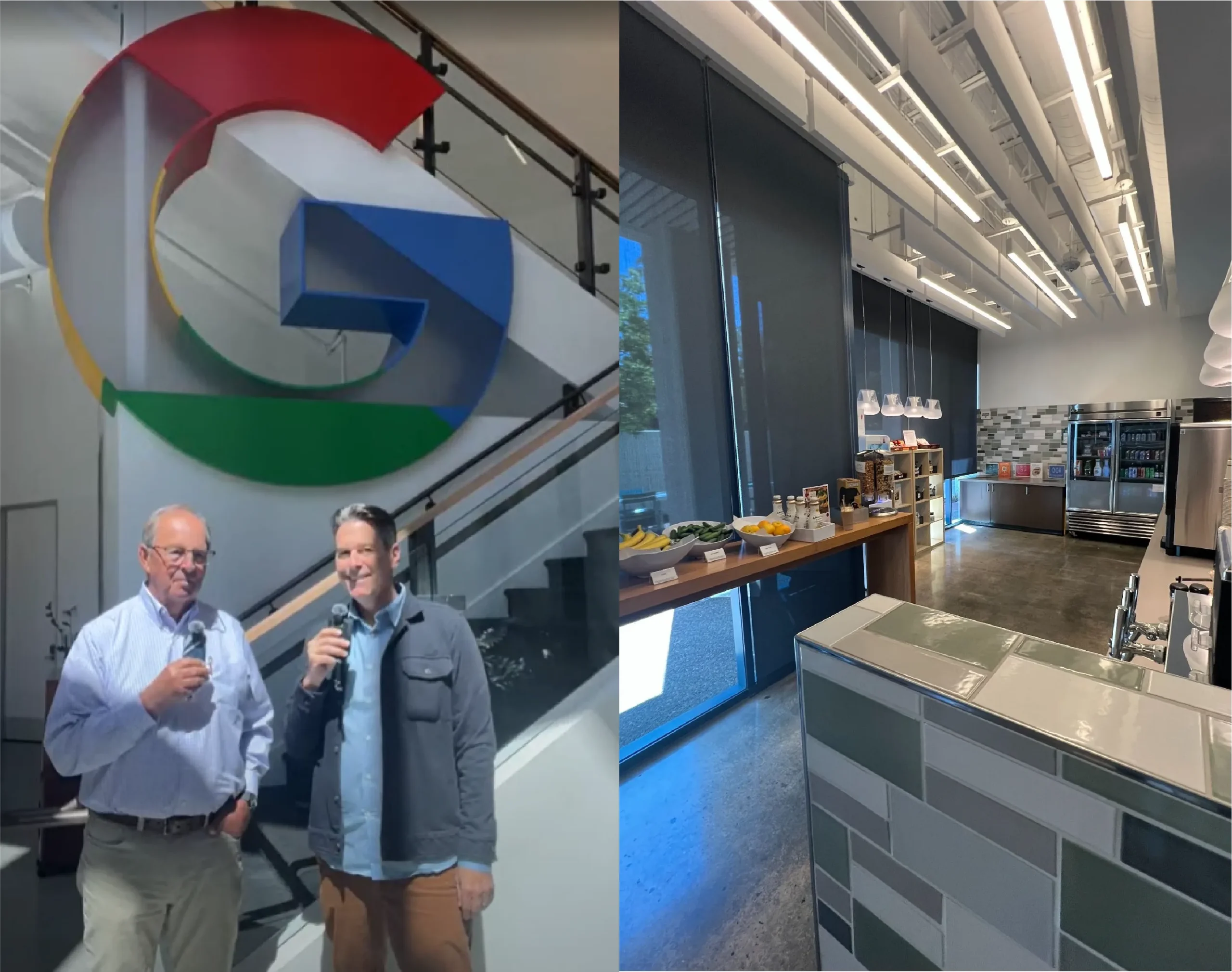
Interviewing hotel consulting legend John Burns for a new HHH project we’ll be sharing soon. I also made a strategic stop at one of Google’s famous free snack rooms. Let’s just say I had plenty of snacks for the flight home. 😉
When I’m not writing Hawaiʻi’s most popular hospitality newsletter 😁😁, I’m working as a hotel and travel industry consultant. Every so often, that means I get a front-row seat to where the industry is headed. Last week, that seat was at Google’s Mountain View campus for a travel advertising summit hosted by Google and Amadeus.
After spending the day with both Google and Amadeus, a few things stood out.
A few notes from my notebook:
Google wants one campaign, not five.
Search, YouTube, Maps, Display, AI Search… Google is working toward a world where marketers define the objective, and AI decides where the campaign performs best. The days of managing every channel separately are numbered.
First-party data is becoming a competitive advantage.
Loyalty members, CRM data, booking history, and audience signals all help Google’s AI make better decisions. Hotels that know their customers will have a head start over those that don’t. The question is, will hotels be comfortable sharing that data with Google (our guess is you won’t have much of a choice)
-
Content matters more than ever: Rich room descriptions, quality photos, videos, amenities, reviews, and structured data all help AI understand your property. We’ve spent years optimizing for Google Search. Now we’re optimizing for AI. Big learning: videos are now searchable, not just the video itself but specific content in the video!
-
Performance Max keeps getting smarter: One feature I found particularly interesting is the ability to focus campaigns on acquiring new customers instead of spending money marketing to guests who were probably returning anyway. Google is trying to solve for the oft-heard claim that PMax is cannibalizing organic search.
-
Universal Commerce Protocol (UCP) will likely become the standard: Think of it as a common language that allows AI, hotels, airlines, OTAs, and other travel companies to search, shop, and complete bookings using the same standard. Google, Amadeus, Marriott, Hilton, IHG, Wyndham, Choice Hotels, Booking.com, Expedia Group, Accor, Trip.com, and many others are already behind it. When this many industry heavyweights line up behind the same standard, it’s usually a good bet on where the industry is headed.
My favorite slide of the day:
Amadeus showed a slide that referenced SEO, GEO, AEO… and then “JKLMNO.” It got a laugh because it’s true. The industry loves new acronyms, but the fundamentals haven’t changed. Great content, accurate data, and a seamless customer experience still win. AI is simply consuming that information differently. So think SEO on steroids.
If I had to pick one takeaway, it’s that Google is building toward a future where marketers aren’t managing channels anymore. Instead, we’ll define business goals and let AI figure out the best way to achieve them. My second biggest takeaway (literally) was the energy bars and dried mango from the famous Google snack room (free and in every building!)
Want to dive deeper? If this stuff interests you, check out the UCP Site and the Google Ads& Commerce Blog.

Industry Events
-
Enough AI Talk. Let’s Build Something. – August 20, 2026 (Honolulu)
-
A Hands-On Workshop for Hawai’i Hotel Commercial Teams
-
-
TIM NIGHT 2026 – August 28, 2026 (Honolulu)
-
Presented by the University of Hawaii School of Travel Industry Management Alumni Association
-
-
Behind the Guest Experience: The Real Estate Economics of Hawaiʻi Hotels – August 28, 2026
-
An Exclusive Lunch with Highgate Hawaiʻi President Kelly Sanders
-
-
Maui WaiWise Stewardship Summit – Nov 9-10, 2026 (Maui)
-
Free educational forum hosted by Maui County DWS focused on hotel water conservation, sustainability, and operational efficiency
-
Full list of 2026 Hawaiʻi Events
*If you have industry events to share, please email me at Dan@hawaiihotelhui.com.

Spotlight on Hawai‘i Hospitality Opportunities
-
Director of Marketing & Communications – Fairmont Orchid (Big Island)
-
Prince Waikiki General Manager – Prince Waikiki (Honolulu)
-
Senior Regional Director of Sales – Hotel Equities (Honolulu)
-
Vice President Sales, The Americas – OUTRIGGER Hospitality Group (Honolulu)
*If you happen to have any job openings, let us know. We will be glad to include them in the newsletter, space permitting; send the job link to Dan@hawaiihotelhui.com.

Writing a newsletter can sometimes feel like sending messages out in a bottle, but whenever the inbox lights up with your comments, hot takes, and school pride corrections, I’m reminded of how lively this Hui really is. From deep-dive airline logistics to setting the record straight on alumni credentials, here is what’s been on your minds this round.
Photo Records & High School Street Cred
-
“Let Dean know that the record for Mufi pictures in his Friday newsletter is 28 in the event he wants to surpass it.”
-
HHH Note: 28 photos in a single issue? That’s not a newsletter, that’s a commemorative photo album!
-
-
“Phew! Mahalo for the clarification.” (about the wrong school)
-
“I do need to correct you on something re: Travis Watanabe; he graduated from K.S., not ʻIolani. He’s my wife’s classmate. Don’t do him dirty like that; he deserves some street cred!”
-
HHH Note: Kamehameha Schools ʻohana, street cred is hereby fully restored.
-
Airline Route Math & The Boise Mystery
-
“Every airline ticket issued in the US is tracked by an entity named the ARC (Airline Reporting Corporation). The data accumulated includes the origin city and destination city of every ticket issued on every airline. By analyzing this data, an airline like Alaska can determine how many individuals fly from, let’s say, Boise to Honolulu during any time period through any connecting city on any airline… That is how they determine the viability of offering nonstop service… In the case of Alaska, most of their aircraft hold 178 seats, and they know what the breakeven point is to become profitable.”
-
HHH Note: We appreciate the masterclass in ARC data and route profitability. That said… we still have a hard time visualizing a Boise direct flight filling 178 seats year-round, but we’ll gladly eat our words if it works out!
-
Data, Tech & Transparent Leadership
-
“The way you explain this is very relevant to a hotel partner I just met with who broke down the percentage of where their revenue came in. The loyalty program was a big base, then OTA, and of course they are still pushing for direct bookings. Turning guest data into anticipatory service is indeed a challenge many face. We’ve noticed that when frontline staff have access to real-time insights, service speed and guest satisfaction significantly improve. It’s fascinating to see how different regions are tackling these common pain points. Kudos to Abra Hospitality for pushing the boundaries in this field.”
-
“Great questions and insight. I think AI may be doing a little of both. It is genuinely changing how work gets done and allowing smaller teams to accomplish more. At the same time, in some cases it may also provide companies with a more acceptable explanation for decisions driven by margins, investor expectations, or traditional restructuring. Either way, leaders owe their people honesty about what is really driving the decision. AI may explain how work is changing, but it should not become a shield from transparent leadership.
-
HHH Note: Spot on. AI can streamline operations and optimize workflows, but leadership accountability can never be offloaded to an algorithm.
-
Good Vibes & Daily Fuel
-
“OMG… you are a crack up… thank you for starting my day!”
-
“Great take. This newsletter is legit!!”
-
👏👏👏 This right here!”
Got a hot take of your own? Think my tech summaries are totally off base, or want to drop a piece of industry lore anonymously? Fire back at dan@hawaiihotelhui.com, and you might just find your words in our next session of inbox therapy.

About Us
Hawaiʻi Hotel Hui was started by hotel industry veteran Dan Wacksman, CEO of Sassato, a Hawaiʻi-based consultancy that combines deep local expertise with a global perspective.
Our team brings decades of experience across operations, marketing, revenue, tech, and finance, all aimed at helping hotels and travel companies make smarter decisions and move faster. Whether you need additional expertise, extra horsepower, or just someone who thinks like you and moves things forward, we’ve got you. From local independents to global brands, we show up with a no-nonsense, results-focused mindset. To be blunt: we get sh*t done.
Recent projects include brand transitions, system selection (PMS, CRS, CMS — all the acronym soup), implementations, project management, feasibility studies, training, audits, and everything in between.
A lot of organizations deal with stretched teams, siloed processes, and messy tech stacks that quietly stall important work. We fix that. Happy to chat if this hits close to home.