
Aloha {{first name |}}!
First and most importantly, our thoughts and best wishes go out to everyone impacted by the recent storms, especially our friends and colleagues on Kauaʻi. We know many in our hospitality ohana are dealing with the effects personally while also caring for guests, employees, and their communities. We’re thinking of you.
This issue has a little bit of everything: a look at what happens to Hawaiʻi’s tourism message after the storms pass, a couple of hotel projects we may or may not live long enough to see, Airbnb quietly building a real hotel business, and some travel CEOs who probably should have read the room before taking the photo.
We also have a few free tickets to give away for AHICE Aloha conference in Waikiki later this month. Want in? Repost any HHH story on LinkedIn, tag us, and email a screenshot to dan@hawaiihotelhui.com. First-come, first-served!
Not already a subscriber? Join the Hui and get the signal sent straight to you; it’s free. Already subscribed? Forward this to someone in Hawaiʻi hospitality who should be reading it.
Want to reach Hawaiʻi’s hotel leadership? Our readers are decision-makers at properties, management companies, ownership, and brands across the islands. Sponsorship inquiries: dan@sassato.com
Mahalo for reading, and as always, thank you for being part of the Hui.
Lots to unpack. Let’s dive in.
Mahalo,

Dan Wacksman
Hawaiʻi Hotel Hui Insider Editor-in-Chief 😄

The Storm Passes. The Message Doesn’t
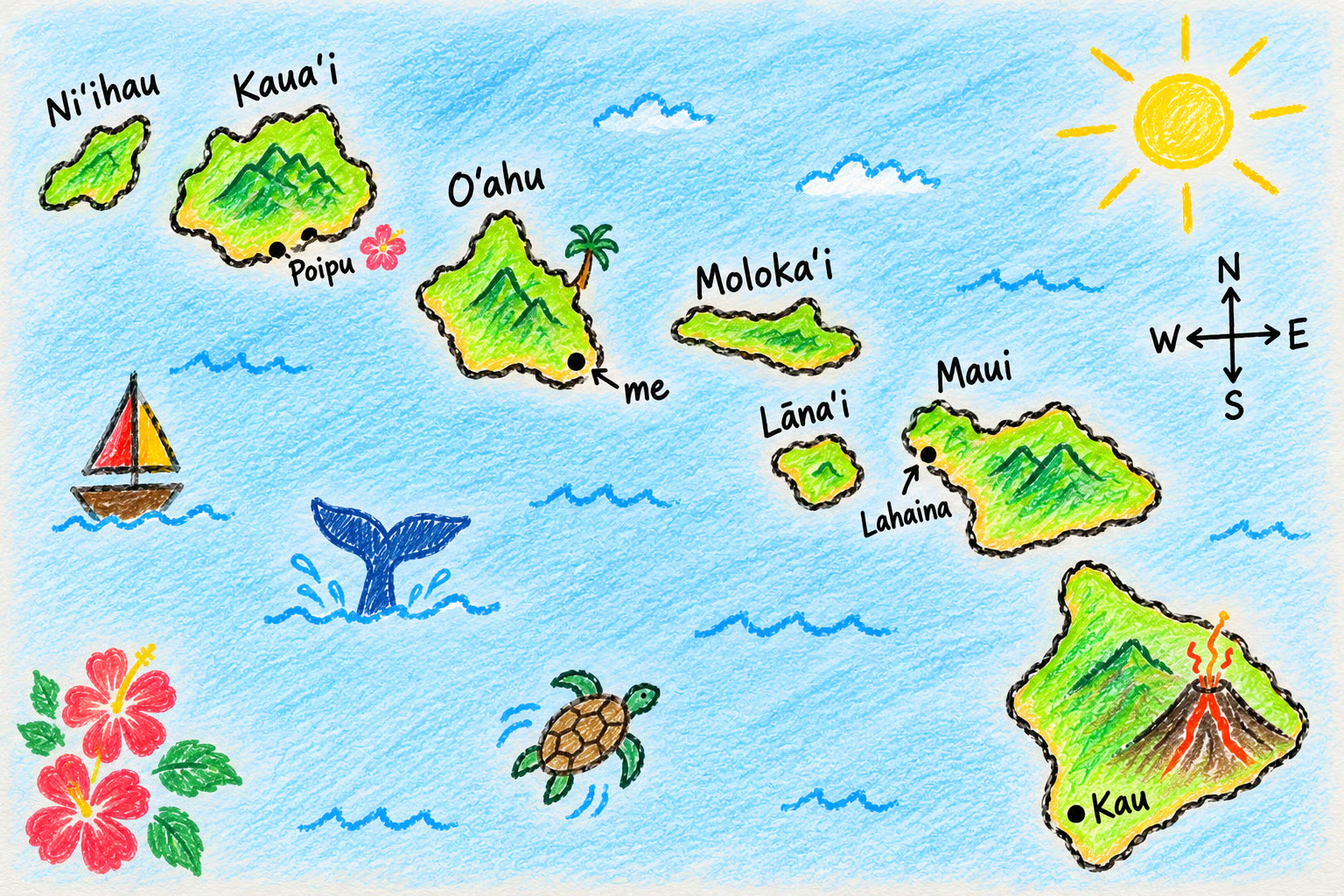
And no, Honolulu is not on the Big Island.
Two Kona lows, then Lala, then Lowell. Plenty of reports say this may be the new normal.
Disaster response isn’t my area, and every time I talk to people who understand it, it scares the crap out of me. But I am a marketer, so let me stick to messaging.
I get the anger when locals see visitors wandering a disaster area looking for the best beach. Kauaʻi needs power, gas, and food right now, not someone asking where to snorkel. The problem is the video doesn’t come with an expiration date or a map. It gets watched next week in Denver and next month in Tokyo, and “don’t come during the recovery” becomes “don’t come to Hawaiʻi.”
And it isn’t only weather. We get media storms too.
In January, the Road to Hāna confrontation made headlines. In May, a Washington man was filmed throwing a rock at an endangered Hawaiian monk seal near Lahaina, sparking immediate local backlash, and rightfully so. Then in July, a brawl at Kāʻanapali Aliʻi sent several visitors to the hospital and led to nine arrests. All three incidents made national headlines. Add in the occasional anti-tourist rant that goes viral, and it’s not hard to see how the perception of tension between visitors and residents can take on a life of its own.
The cycle is as old as… well, social media… somebody posts it, national news picks it up, outrage carries it, and the family planning spring break starts questioning whether Hawai’i is the right destination for them.
Lahaina taught us that messaging has a long shelf life. Add geographic ignorance, and it gets worse. I spent last week telling friends on the continent I live on Oʻahu and, yes, explaining again that Honolulu is not on the Big Island.
The good news is official messaging has gotten sharper. Travelers with Kauaʻi plans were told to switch islands rather than cancel Hawaiʻi, and Canada’s advisory stopped at Kauaʻi County. Be specific about where the problem is and where people can still go.
But the conversation shaping Hawaiʻi’s reputation isn’t happening on official websites. It’s on Reddit, Instagram, TikTok, and Facebook. Hotels already use sentiment analysis tools to monitor hotel reviews. We also need to spend more time watching the destination.
And watching is only half of it. Arguing with someone angry about tourism is pointless. They’re not the audience anyway. The audience is the family in Denver wondering whether to cancel. Answer the question, not the feeling. What’s open? What’s flying? Which islands or areas are OK to visit?
Bad news sells, outrage travels, and neither cares much about geography. The story that everything is open and welcoming rarely goes viral.
If Hawaiʻi wants visitors, we can’t assume they know they’re welcome. Someone has to tell them.
Hotels That May Never Happen and Remembering the General
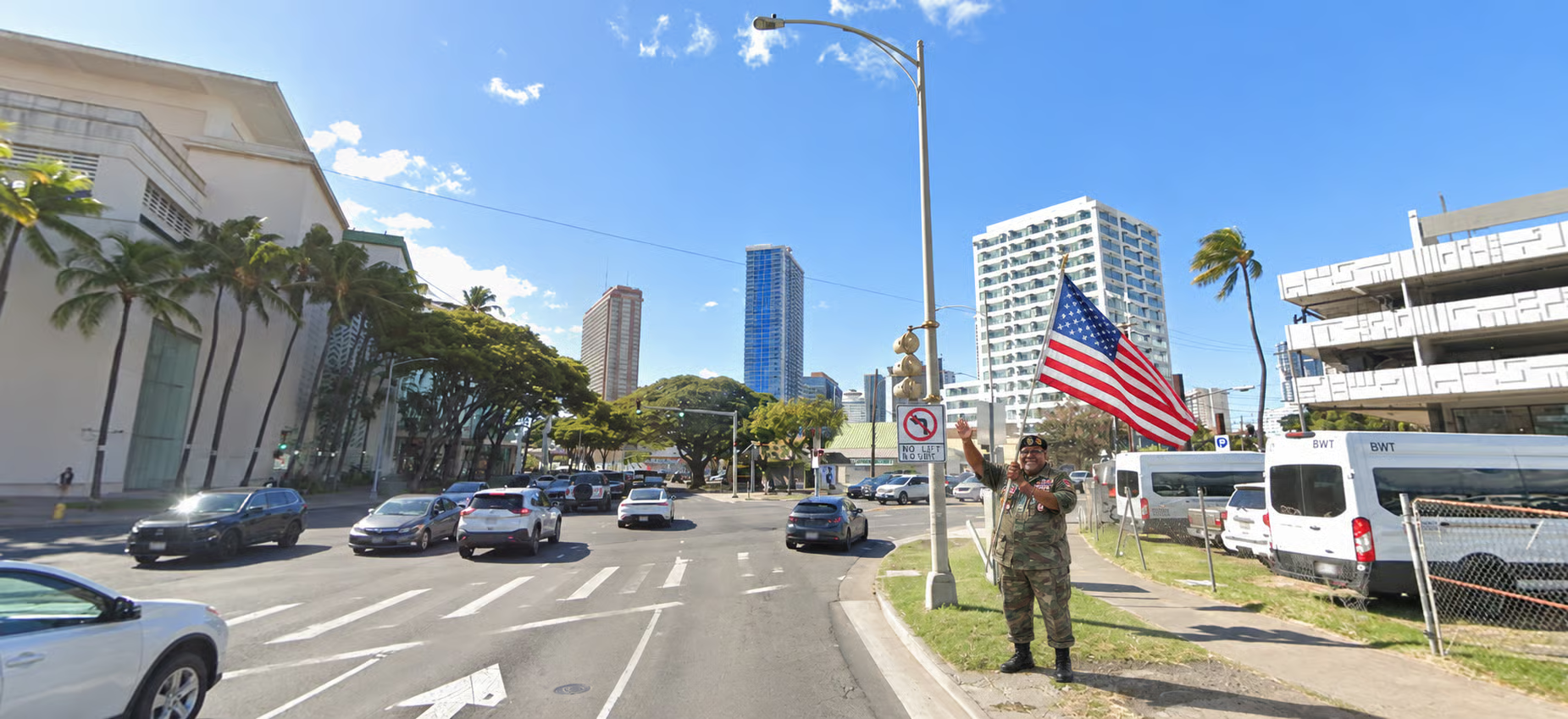
AI-generated (we didn’t have mobile phones back then. )
Back in May we called the Ala Moana Center proposed tower what it is: luxury dropped into a mall parking lot. Four months later, the project is asking for more time.
BSC Acquisitions II, the Kobayashi Group and BlackSand affiliate behind 1588 Ala Moana, requested a 90-day extension and the Council granted it last week. The project is still 294 hotel keys in a 38-story, 400-foot tower plus 205 residential units. If the Council eventually approves the permit, the developer gets five years to pull a building permit. If this does happen, it will likely be a few years down the road.
And in other news of hotels that may or may not ever happen, Nan Inc. just spent $18.5 million on more than an acre near Kalākaua and Kapiʻolani and plans a 400- to 600-unit residential and hotel tower. No timeline yet; it’s very early, and Nan doesn’t own one 6,413-square-foot parcel sitting in the middle of the site. Apparently, they’ll either buy it or build around it.
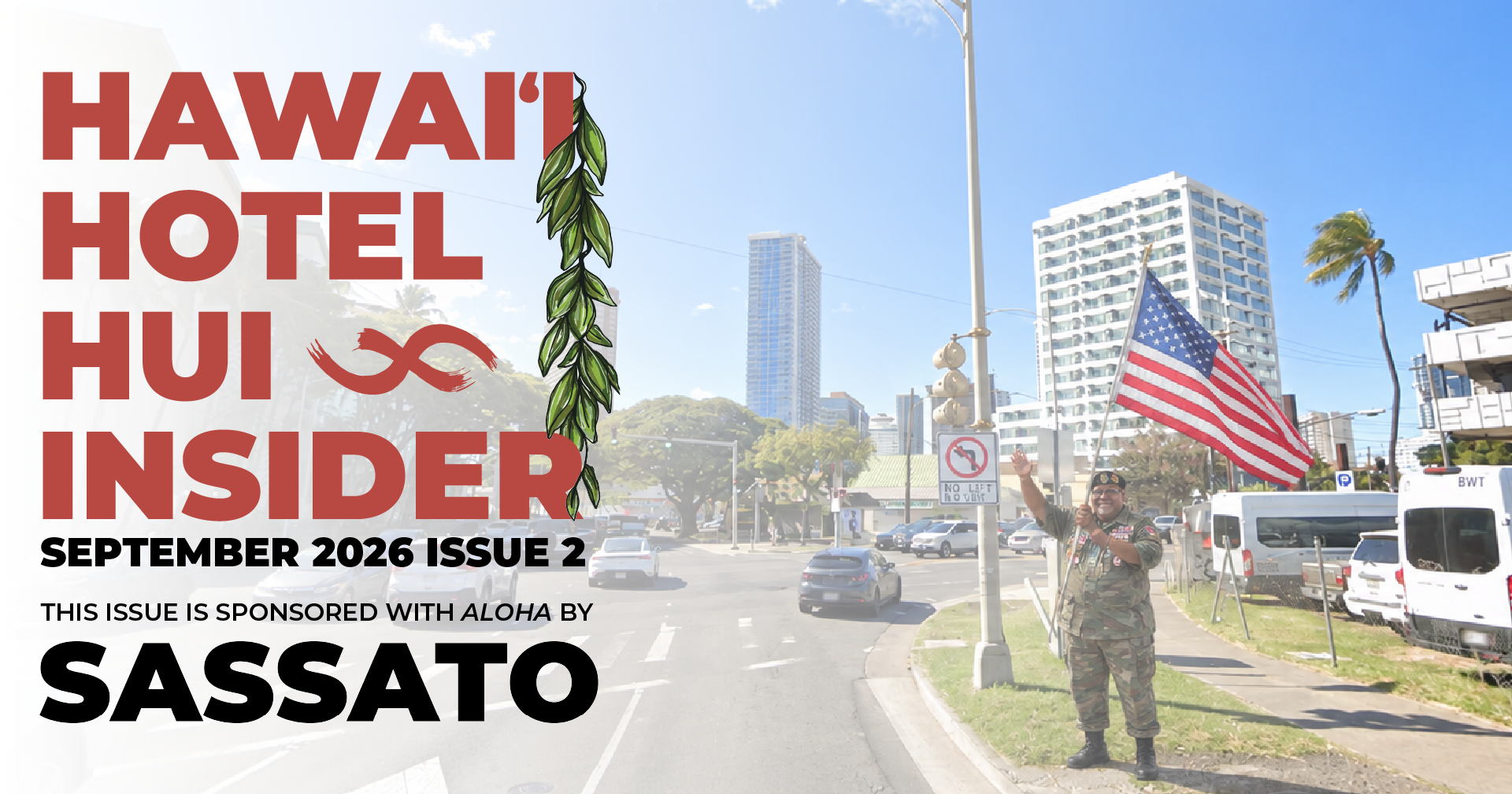
That corner also brings back a very different memory, especially coming off the 25th anniversary of 9/11. Whenever I pass it, I still think of “the General,” John H. Rogers Jr.. For years, he stood across from the Hawaiʻi Convention Center waving the American flag at morning commuters and advocating for veterans. He died after collapsing at that corner in December 2001, just three months after 9/11. I can still see him standing there, waving that flag.
Who remembers the General?
AHICE Aloha: Big Voices, Real Talk, and Free Tickets (Maybe)
-Sponsored-
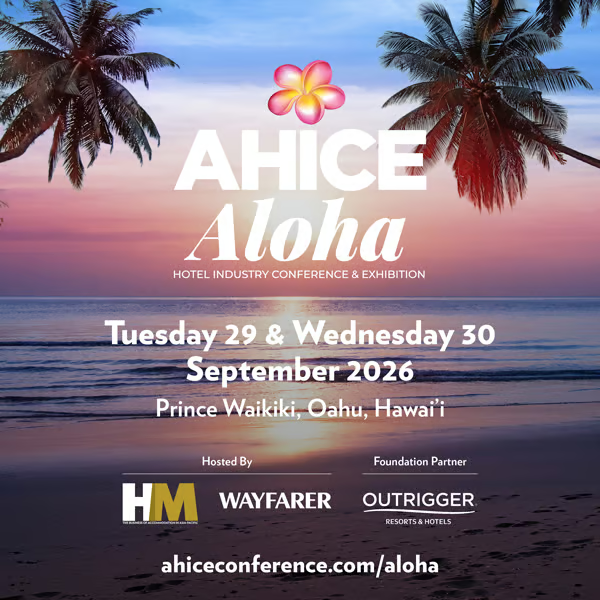
AHICE Aloha is back in Waikīkī later this month, bringing together hotel and tourism leaders from across Hawaiʻi and beyond.
The 2026 event takes place September 29–30 at Prince Waikīkī, with industry names including Outrigger, Accor, Colliers, Marriott, Wyndham, JLL, STR, and CoStar, and, most importantly, Hawaiʻi Hotel Hui!
The agenda? Hotel development, operations, investment, tourism, tech, and the real-world issues shaping Hawaiʻi hospitality, plus plenty of networking, site tours, and social events around Waikīkī.
Want in? We’ve got a few free tickets to give away. Repost any HHH story on LinkedIn, tag us, and email a screenshot to dan@hawaiihotelhui.com. First-come, first-served!
The Beach Is Public. The Park Isn’t.
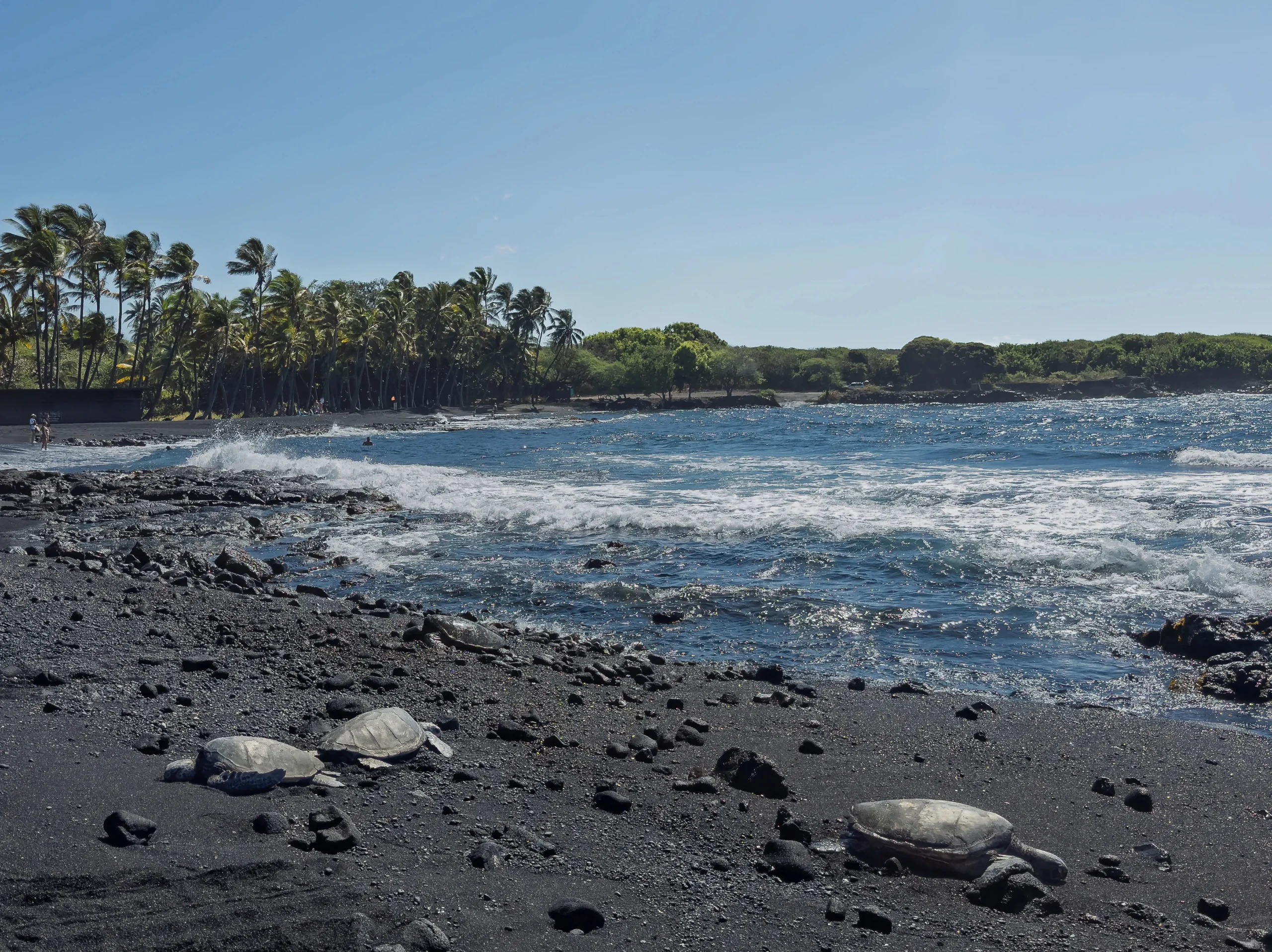
So let me get this straight. The Robinson family owns Niʻihau. Larry Ellison owns about 98% of Lānaʻi. And a private company owns Punaluʻu Black Sand Beach Park?
Aren’t all beaches in Hawaiʻi public? Well, yes. Sort of.
Hawaiʻi has strong laws protecting public access to its shorelines. But the land behind the beach can be privately owned, including the parking lot, bathrooms, picnic areas, and other infrastructure that makes a beach accessible.
For more than 70 years, Hawaiʻi County leased 6.8 acres next to the famous black sand beach and operated it as a public park. The county maintained the bathrooms, parking, picnic pavilions, and other facilities.
So who owns it? The current owner is Black Sand Beach LLC, led by Bay Area real estate developer Eva Liu. Liu and her partners acquired much of the former Sea Mountain property surrounding Punaluʻu beginning around 2019. Their holdings total roughly 433 acres and at one point were slated for a much larger redevelopment that included 225 residential and short-term rental units, retail, dining, and other amenities. Those development plans have since been put on hold.
The lease expired August 29 without an agreement, so now the bathrooms are locked. The lifeguard stand is closed. County signs have been removed, and the county is no longer maintaining the property.
The black sand is still there. The honu are still there. And the public still has shoreline access. But access isn’t necessarily the same thing as accessibility.
Parking, bathrooms, trash collection, maintenance, and lifeguards are all part of the experience of visiting a place like Punaluʻu, and somebody has to own, operate, and pay for them. Seems to us that certain lands should not be in private hands.
Too Risky for Residents, Just Right for Guests
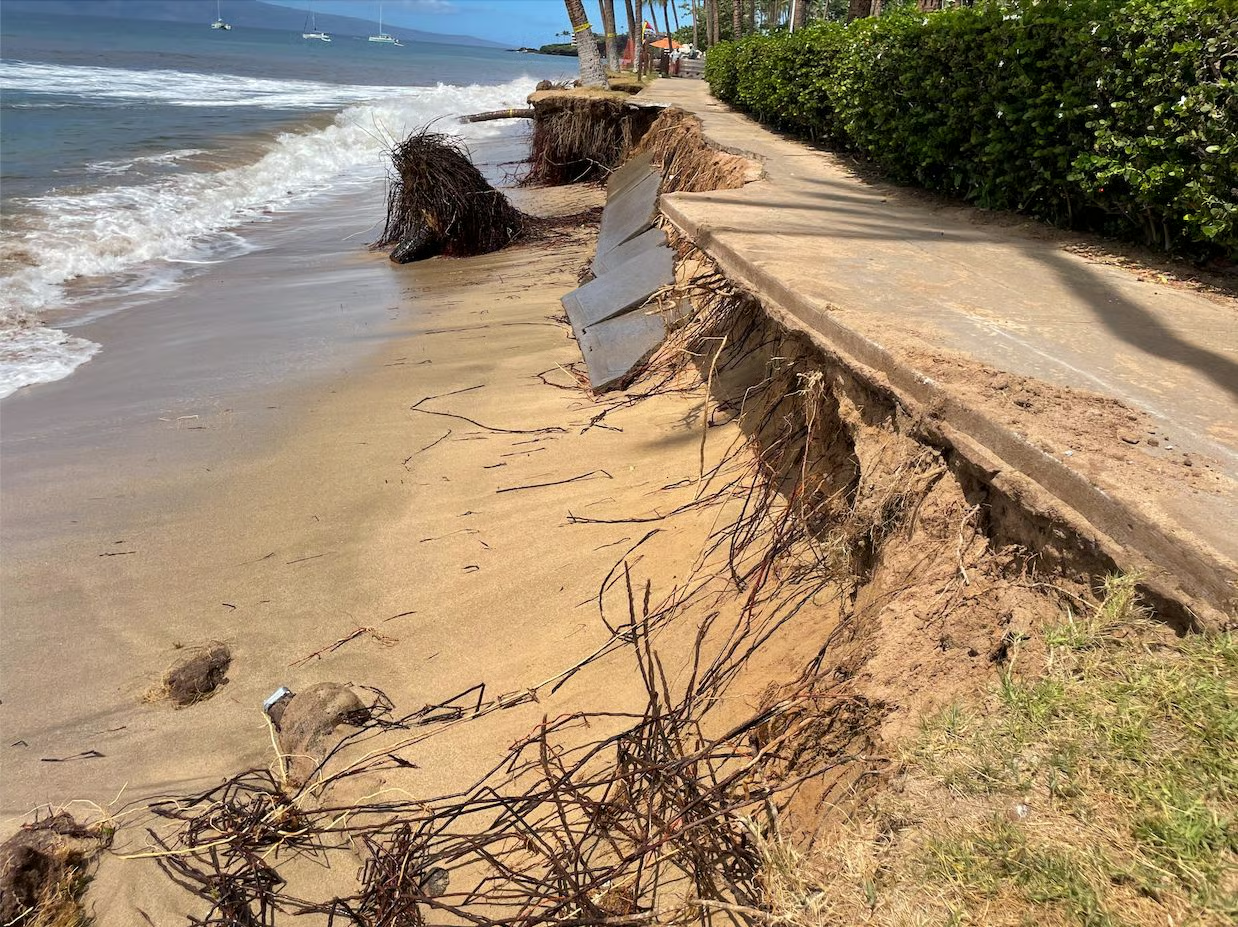
In a somewhat related story about the water’s edge, Maui’s Housing and Land Use Committee voted 5-4 to tie hotel-district rezoning eligibility to how deeply a property sits inside the county’s Sea Level Rise Exposure Area. The more at-risk the property is for erosion, the better its case to keep renting by the night.
There’s a fair argument buried in there that you don’t solve the housing crisis by handing local families a unit that may not have a long future. It just strikes us as a somewhat strange policy. Four resolutions now have roughly 2,554 units moving toward permanent hotel zoning, more than a third of everything Bill 9 was supposed to phase out.
Who’s Paddling at Outrigger?
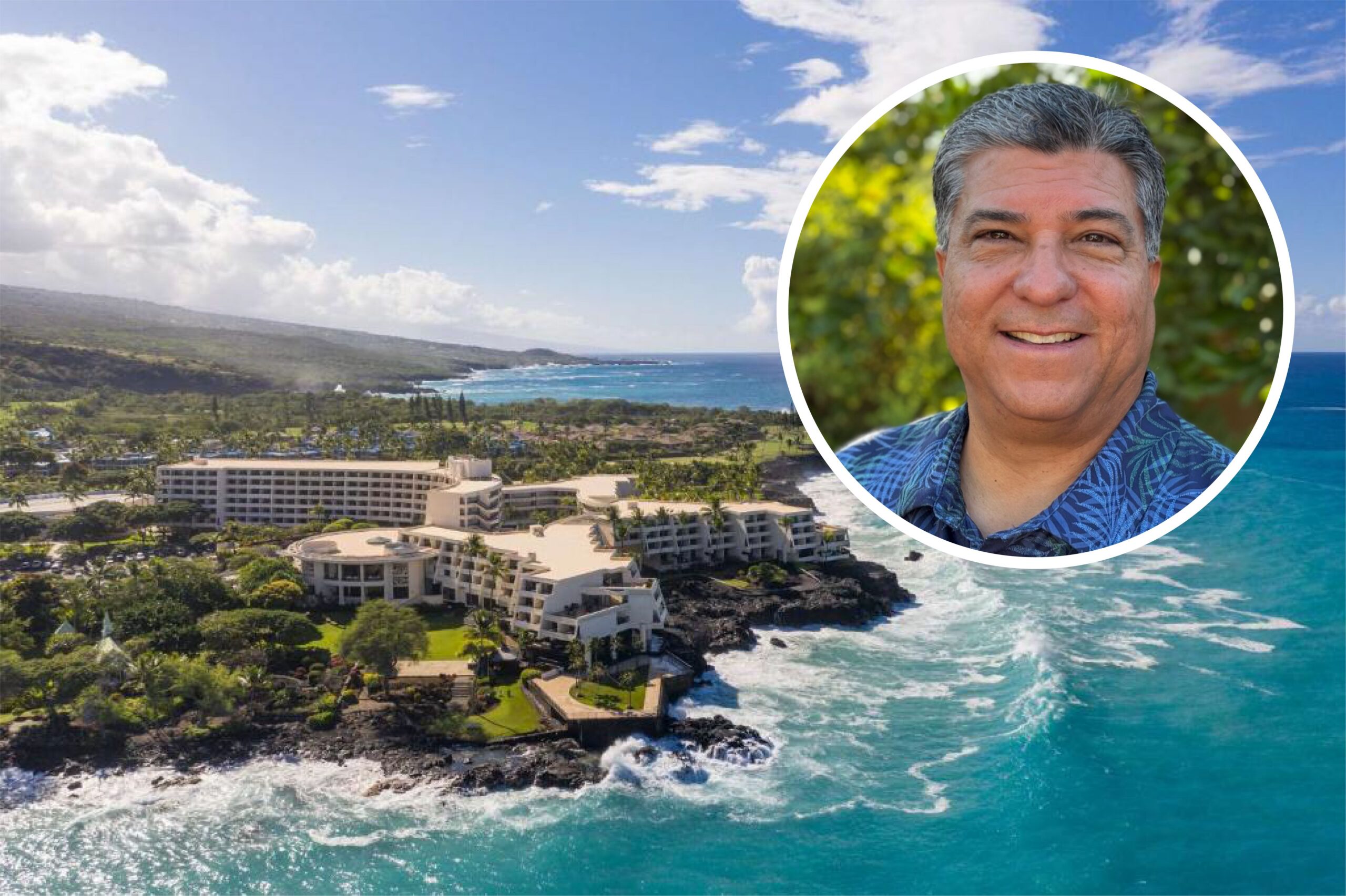
There seems to be some movement in the Outrigger canoe lately. The recent departures of its VP of Sales and VP of Brand have led to two key positions opening, and there has been chatter about other potential changes at the senior levels, though we have nothing solid to report just yet.
What we can report is a strong addition in Kona: Outrigger has named John Dominguez Director of Sales and Marketing at OUTRIGGER Kona Resort & Spa. Dominguez brings more than 25 years of hospitality sales and marketing experience, including more than a decade at Waikoloa Beach Marriott, and he previously led sales and marketing at the Kona property during its Sheraton days. With a few paddlers apparently changing seats, bringing aboard someone who already knows the resort, Hawaiʻi Island, and the relationships that drive business there makes a lot of sense. Hoʻomaikaʻi, John!

Airbnb Hotels: Full Speed Ahead
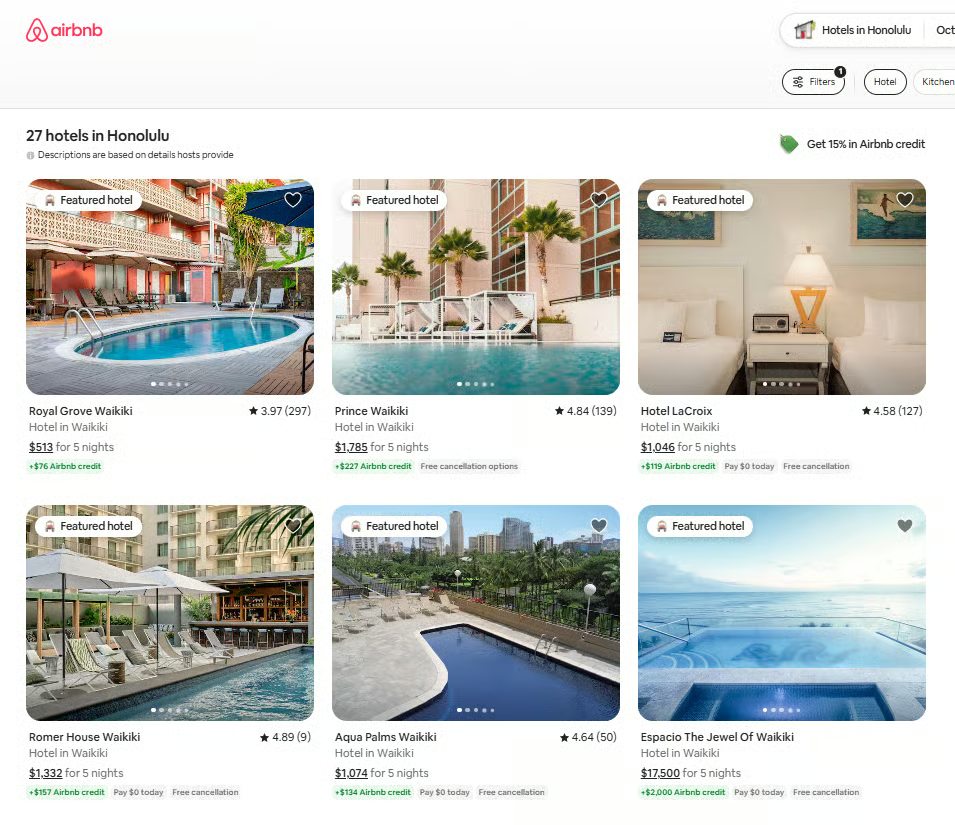
In June we went looking for Hawaiʻi hotels on Airbnb and mostly came up empty. With more senior hires coming in to build the hotel business, it reminded us to try again. Search the normal way, and you still get homes. Click the Hotel filter on Oʻahu and 27 hotels in Honolulu appear, among them Prince Waikiki, Hotel LaCroix, Romer House and Aqua Palms, each carrying 15% back in Airbnb credits. The UX for hotels isn’t bad either. Not great, but a real improvement on earlier attempts to squeeze hotels into the vacation rental layout. Neighbor islands are a different story. You get room listings, not an actual hotel page with all the room types and rates in one place.
Behind it is a hotel team built by raiding the company Airbnb is chasing:
-
Lou Zameryka, global head of hotel enterprise and connectivity partnerships (January). Career at Booking.com, including regional manager for the Americas.
-
Andrea D’Amico, global head of hotels (June). Eighteen years at Booking.com, up to VP and managing director for EMEA.
-
Pepijn Rijvers, chief business officer (Sept). Thirteen years at Booking.com, ending as managing director of accommodations.
And we can’t leave out our own local Airbnb hotel person, Karin Jialin Cao Parker (ex-Expedia), who is working hard to build out the hotel inventory in the islands.
From what we hear, bookings are still small and commissions slightly lower than the other OTAs. From our POV, more competition in the OTA space is a good thing; the duopoly could use a challenge.
Read the Room, Guys (and I do mean Guys)
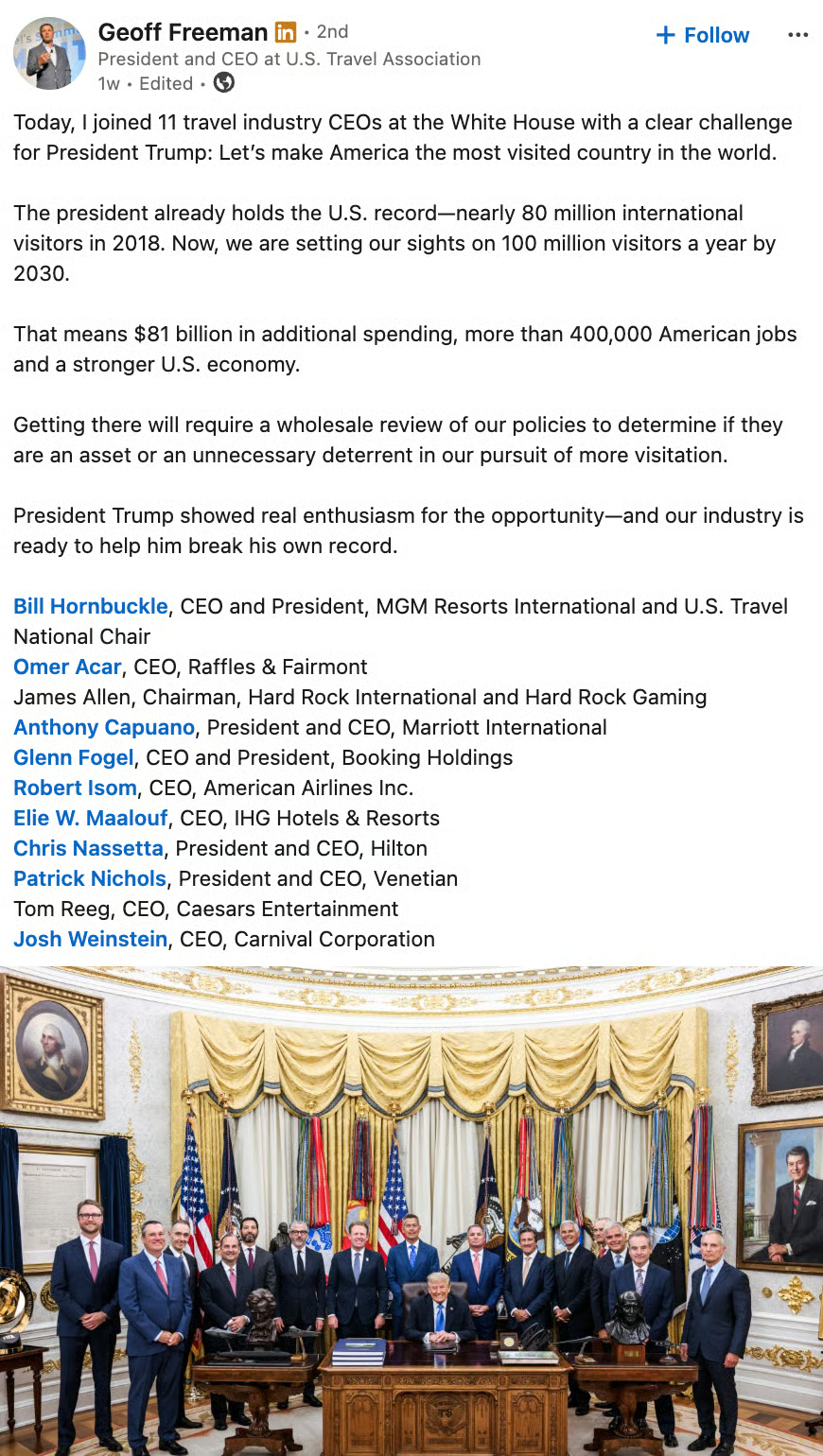
Eleven travel industry CEOs joined U.S. Travel’s Geoff Freeman at the White House to pitch President Trump on making the U.S. the world’s most visited country, with the goal of 100 million international visitors a year by 2030. Freeman followed up on LinkedIn by reminding everyone that Trump holds the U.S. record with nearly 80 million visitors in 2018 and saying the industry was ready to help him “break his own record.”
I commented that conveniently ignoring what’s happened to international visitation since then struck me as a convenient omission (though I did use more colorful language). Apparently I wasn’t alone. The comment got more than 100 likes, and plenty of others piled on about both the message and the optics. When I went back looking for my comment on the post while writing this story, it was gone. Make of that what you will.
But what shouldn’t disappear are the numbers. In 2018 we had 80 million visitors while the 2026 forecast is 70 million, a staggering 10 million visitor downgrade, in the World Cup Year! Overseas visitation has declined year over year for four straight months, and 56% of Canadian travelers say U.S. government policies, trade practices and political statements make them less likely to visit.
So yes, let’s shoot for 100 million. But before congratulating the President on what happened eight years ago in the early days of his first term, our industry leaders might want to have a more candid conversation about what’s happening right now.
And then there’s the photo. Eleven CEOs representing some of the biggest companies in travel gathered to discuss the future of one of the world’s most diverse industries, and every one of them was a man. Something plenty of people in the LinkedIn comments noticed. We talk endlessly in hospitality about diversity, representation, and developing the next generation of leaders. Yet when our industry gets one of its biggest tables, somehow the people sitting around it still don’t look much like the people who work in it.
Getting to 100 million visitors is a worthy goal. But it’s going to take more than a flattering photo op, some selective nostalgia for 2018, and a room full of guys telling the President what he wants to hear. For those in the room, you may want to have another read of The Emperor’s New Clothes.

What Is Meta Muse?
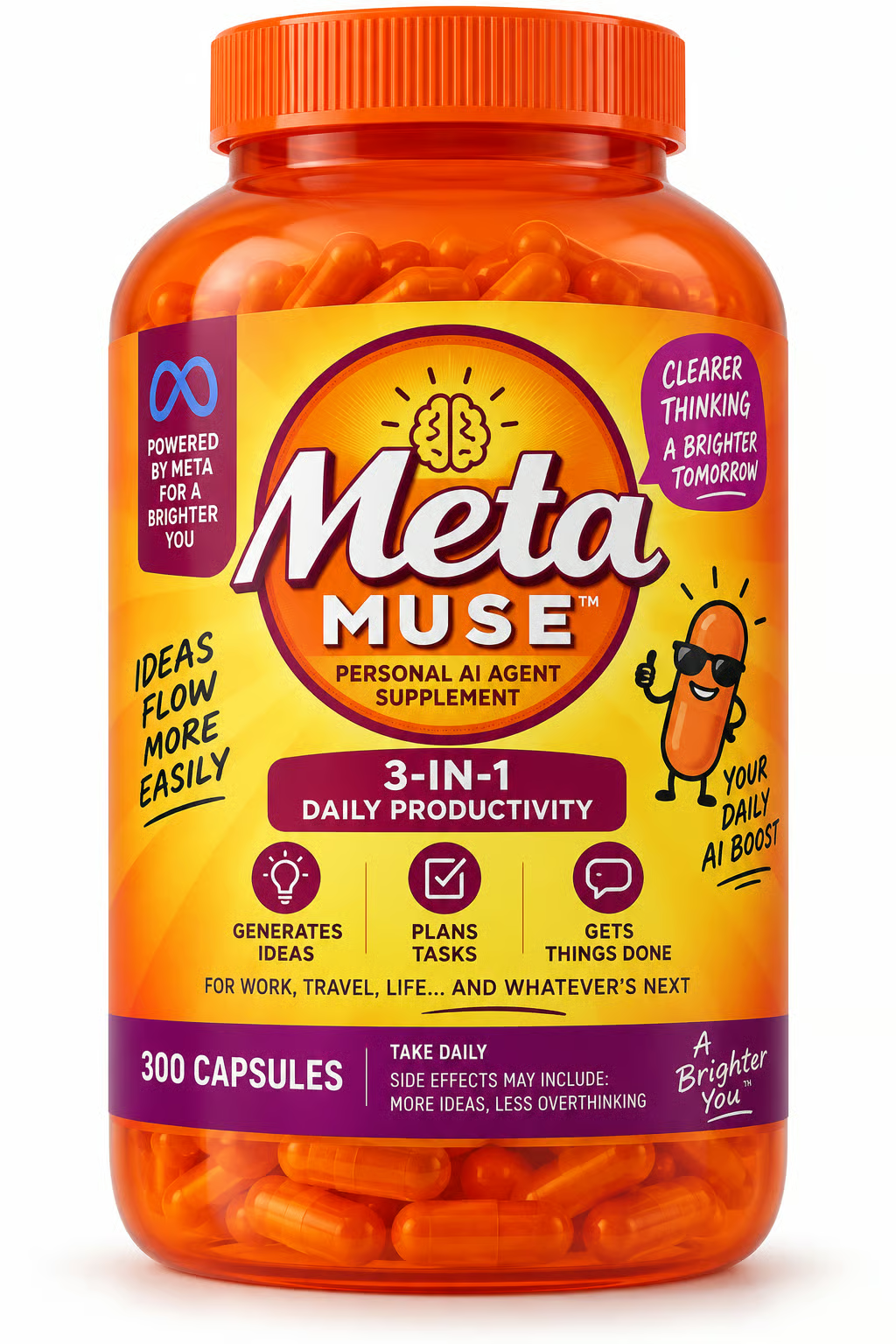
Despite sounding like something recommended by your gastroenterologist, Muse is Meta’s new personal AI agent, launched Sept. 8. It’s live in the U.S. on iOS, Android, at Muse.ai and inside WhatsApp, with AI glasses coming.
Every AI company has an agent now, the kind that doesn’t just answer your question but goes off and does the task itself. Anthropic has Cowork, OpenAI has agent mode, and Google and Microsoft have their own. Think of an agent as a step beyond a chatbot: instead of telling you how to do something, it actually does it for you, like making a reservation.
Muse is being pitched as a personal assistant. Give it a goal, and it builds a plan, then keeps working after you close the app, checking back before it sends an email or spends money. It can connect to your email, calendar, and Instagram, remember what you tell it, and come back with suggestions. It’s free for most use, with paid tiers.
Roughly 83,000 iOS downloads in the first few days was good enough for No. 2 on the App Store, but a long way from the 4.3 million downloads Threads pulled on day one.
And, of course, travel is on the list. Muse handles flights through a direct connection to Duffel. Hotels have no such connection, so it shops the open web the way a guest would. Hotel booking is still pretty rudimentary at this point. We tried it, and frankly, it was easier to just book the hotel ourselves. But these are early days, and it’s going to get better.
The race to “simplify” the booking process (and monetize the hell out of it) is in full swing.

Industry Events
-
Hawaiʻi Tourism Conference 2026 – September 24-25 (Honolulu)
-
Two-day statewide tourism conference focused on destination stewardship, industry resilience, sustainability, and improving visitor and resident experiences.
-
-
AHICE Aloha – September 29-30, 2026 (Honolulu)
-
The event will feature on-stage sessions alongside fantastic networking events over two days in Hawaii.
-
-
Maui WaiWise Stewardship Summit – Nov 9-10, 2026 (Maui)
-
Free educational forum hosted by Maui County DWS focused on hotel water conservation, sustainability, and operational efficiency
-
Full list of 2026 Hawaiʻi Events
*If you have industry events to share, please email me at Dan@hawaiihotelhui.com.

Spotlight on Hawai’i Hospitality Opportunities
-
HLTA Executive Director – Hawaii Lodging and Tourism Association (Honolulu)
-
Area Director of Marketing – Hilton Hawaiian Village Waikiki Beach Resort and Hilton Waikoloa Village (Honolulu)
-
Vice President Global Brand Marketing – Outrigger Hospitality Group (Honolulu)
-
Growth Systems & Performance Manager -Castle Resorts & Hotels
-
Complex Director of Revenue Management – Highgate (Honolulu)
*If you happen to have any job openings, let us know. We will be glad to include them in the newsletter, space permitting; send the job link to Dan@hawaiihotelhui.com.

Between deep-dive memories of Takeshi Sekiguchi’s ambitious development of the Grand Wailea and spirited pushback on Bill Gates’ tech track record, the Hui brought serious comments. We also got into the gritty math behind Hawaiʻi’s “value over volume” tourism strategy and the absurd operational reality of enforcing new lobby gun signage.
Good Old Hui Praise
-
“LOL…made my day…AGAIN”
-
“We love the color that the hui provides, details that no one else would know”
Grand Wailea Lore & Heavy Metal Math
-
“Takeshi Sekiguchi spent $900M on the Grand Wailea (some say over $1B), working out to a rounded $1M per key back in 1990. That included curating the most expensive corporate art collection in the state at $30M. $1M in 1990 dollars would be about $2.5M today, so at $2M a key today, some might say it’s a bargain!”
-
“I worked on the original Grand Wailea with the owner before it opened! It was a great pleasure to work with him and CDS Architects. We produced four marketing scale models before it was built, and I was deeply involved in the design risk management as well.”
Silicon Valley Skepticism & The ‘Human Reserved’ Debate
-
“Bill Gates has been wrong on far more occasions than he’s been right. Notable miscalculations: claiming ‘640K ought to be enough for anybody,’ underestimating the commercial internet in the early ’90s, predicting workplace meetings would move into 3D metaverse spaces by 2024, foretelling the death of passwords and computer mice, and predicting spam would be completely eliminated by 2006.”
-
“’Human Reserved’ is the right frame. Arrival is my prime example; automating it saves ninety seconds, but it costs you the only face-to-face moment some guests get all stay. That’s worth deciding on purpose instead of by default.”
-
“As someone who works with AI, I am super hesitant to use it in most capacities. No automated messages or data mining for me, as I try to maintain authenticity. But as a creative, it’s a whole new medium to work with, and the applications can be super profitable for both creator and client.”
The ‘High-Value’ Tourism Math Check
-
“Many destinations want to pivot to ‘high-value’ tourists but ignore the fact that there is simply not enough high-end product or service available to attract these high-spenders. Increasing prices without a corresponding improvement in product will result in lower overall revenue. Middle-class visitors are often more loyal than the ‘jet-set,’ who move on to the next shiny thing, and entry-level young visitors age into high-spending professionals. Last but not least, high-end dollars concentrate in a few hands, flowing offshore to corporate HQ rather than local mom-and-pop stores.”
-
HHH Note: Spot on! Fewer visitors, means fewer visitors (customers) across the board, and that reality comes with very real, trickling economic implications.
-
Lobby Law & Poolside Signage
-
“Well, that’s a can of worms to open. It’s like those California pool health signs saying you can’t enter if you have stomach issues… except now front desk agents have to enforce firearm rules with someone carrying a gun?! Seems problematic.”
Got a hot take, a bone to pick, or deep industry lore to share? The inbox is wide open for your anonymous confessionals. Fire off your thoughts to dan@hawaiihotelhui.com or dan@sassato.com, and you might just see your commentary featured in the next issue!

About Us
Hawaiʻi Hotel Hui was started by hotel industry veteran Dan Wacksman, CEO of Sassato, a Hawaiʻi-based consultancy that combines deep local expertise with a global perspective.
Our team brings decades of experience across operations, marketing, revenue, tech, and finance, all aimed at helping hotels and travel companies make smarter decisions and move faster. Whether you need additional expertise, extra horsepower, or just someone who thinks like you and moves things forward, we’ve got you. From local independents to global brands, we show up with a no-nonsense, results-focused mindset. To be blunt: we get sh*t done.
Recent projects include brand transitions, system selection (PMS, CRS, CMS — all the acronym soup), implementations, project management, feasibility studies, training, audits, and everything in between.
A lot of organizations deal with stretched teams, siloed processes, and messy tech stacks that quietly stall important work. We fix that. Happy to chat if this hits close to home.