For the past couple of years, we’ve heard endless promises about how AI will make hotels more efficient. Now someone is actually building a hotel management company around that idea.
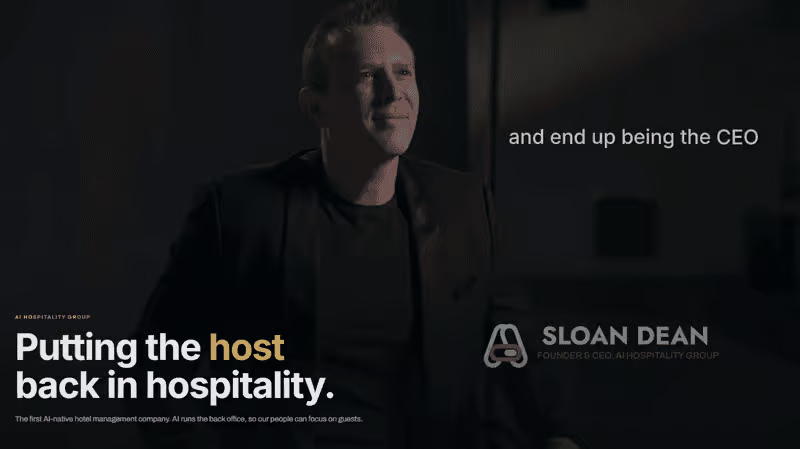
Sloan Dean, former CEO of Remington Hospitality, has launched AI Hospitality Group, a new operator designed from the ground up around agentic AI and automation. The company has raised $7.5 million, is designing operations for three hotels and expects to take over its first properties later this year.
The pitch is pretty simple: run full-service hotels with fewer managers and automate much of the administrative work that still happens through emails, spreadsheets, and meetings.
Dean isn’t dancing around the labor implications. “You do have to destroy some jobs,” he told Skift. His target is primarily middle management and administrative-heavy roles. He says a hotel sales team of five or six people, for example, could become two or three, with AI handling things like RFP responses, displacement analysis, and CRM updates.
Dean believes the model can improve gross operating profit margins by 500 basis points. For those of us who don’t speak fluent investment banker, that’s five percentage points. (Although I have to admit, 500 basis points sounds way more impressive.)
Whether he can actually deliver that remains to be seen. But the timing is interesting because AIHG isn’t the only company rethinking how many people it needs.
PMS provider Mews recently cut 15% of its workforce on its way to becoming “AI-native.” Expedia has gone through multiple rounds of layoffs, and says AI lets smaller teams work faster. Booking hasn’t announced AI layoffs, but CEO Glenn Fogel has warned that AI will likely mean fewer jobs, including at Booking, and wants every employee AI-literate so they can move into new roles. And Oracle, whose OPERA system runs a lot of Hawaiʻi front desks, has shed roughly 21,000 roles over the past year as it pours money into AI.
For years, hotel technology companies have been telling hotels that automation will let them do more with fewer people (though that never seemed to happen). It looks like they’re starting to take their own advice.
If AIHG can actually deliver higher margins without sacrificing service, owners will start asking their current management companies why they can’t. And a lot of managers will be wondering if they’re the ‘minus.