
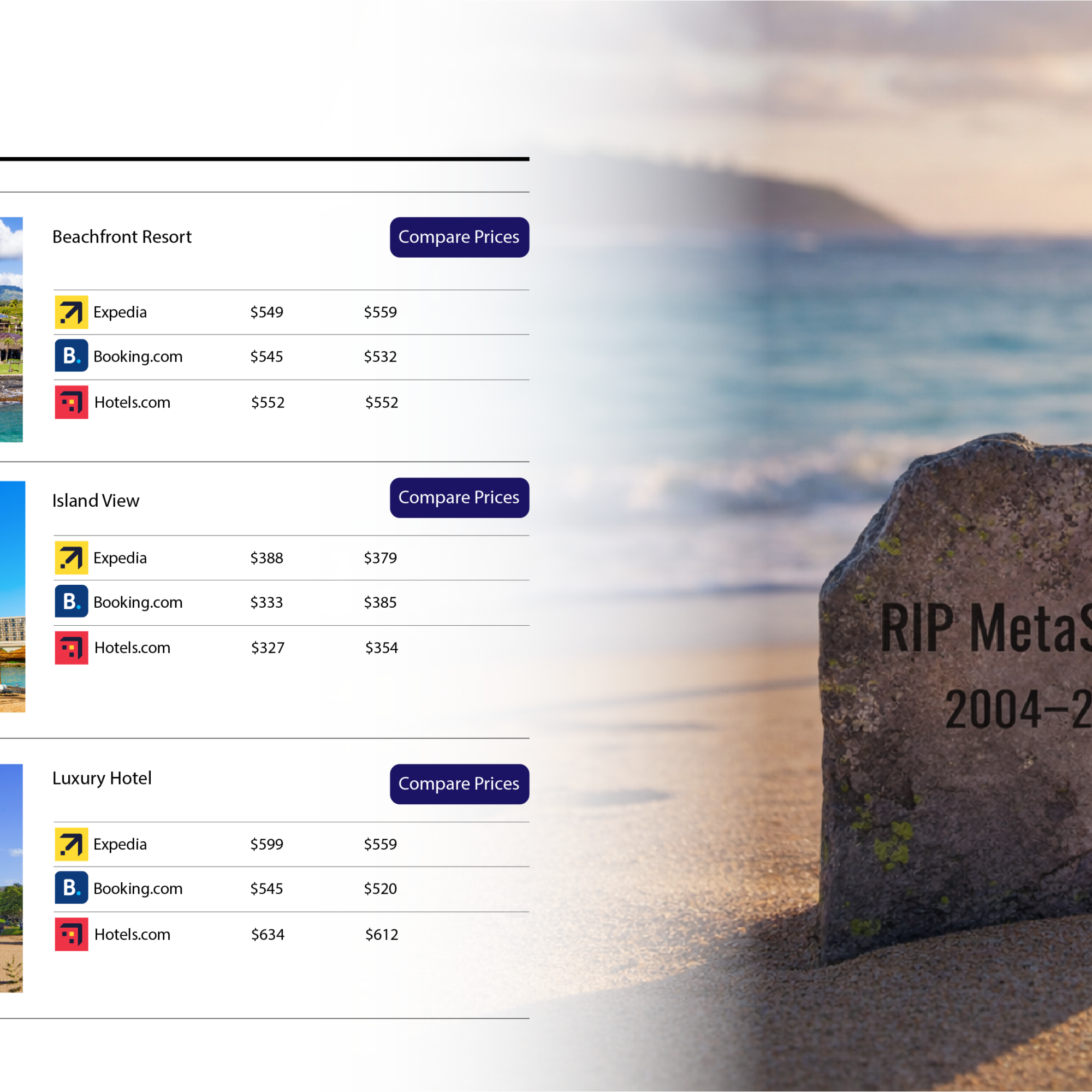
One of the perks of aggregating and curating stories every month is that you start to see the throughlines. And here’s one that’s getting harder to ignore: the demise of metasearch may be accelerating.
Trivago, once powered by wall-to-wall TV ads and the creepy “Trivago Guy,” is now pivoting hard into streaming, podcasts, and AI-driven search. Revenue grew 27% in Q4, but EBITDA barely moved. Advertising spend was up 31%. Translation: Growth is expensive. Trivago is now trading at $2.90, way off its peak of $118.
TripAdvisor is fighting a different battle. SEO traffic is declining thanks to Google’s AI Overviews, and even management admits visitors are fading. The company is exploring “strategic alternatives,” which is corporate code for “we’re looking at options.” The stock dropped 18% on earnings and now trades under $10, a far cry from its peak of $110. Not exactly a vote of confidence.
And then there’s Kayak. Founder Steve Hafner is out as CEO after 22 years, ostensibly moving into an AI-focused role at Booking Holdings. Booking already took a $457 million writedown on Kayak, citing lower future cash flows and higher acquisition costs as Google’s AI products reshape search.
Notice the pattern?
Metasearch was built for a world where consumers typed in “hotels in Waikīkī” and compared blue links. Today, travelers ask ChatGPT, Gemini, or Claude to build an itinerary, suggest neighborhoods, and summarize reviews. A grid of pay-for-play rates feels like showing up to an AI fight with a flip phone.
Metasearch still drives serious traffic and bookings. But if AI becomes the new front door to travel discovery, the old comparison engine may start to look like a very unsophisticated, very expensive middle layer.