
One of the more interesting parts of my hotel days was reading the daily security reports. Sometimes amusing, sometimes terrifying, always written in Pentagon-style. I still recall a line that appeared more than once: “Security assisted the individual to the ground for their safety.” Hotel security teams are a distinct breed. I was reminded of that at the recent Visitor Public Safety Conference, put on by HLTA earlier this month.
While I usually focus on heads in beds, not hands in cuffs, the range of topics was eye-opening, from natural disaster preparedness to assisting visitors who are victims of crime (if you’re not familiar with VASH, you should be). But the discussion that really stuck with me was surveillance.
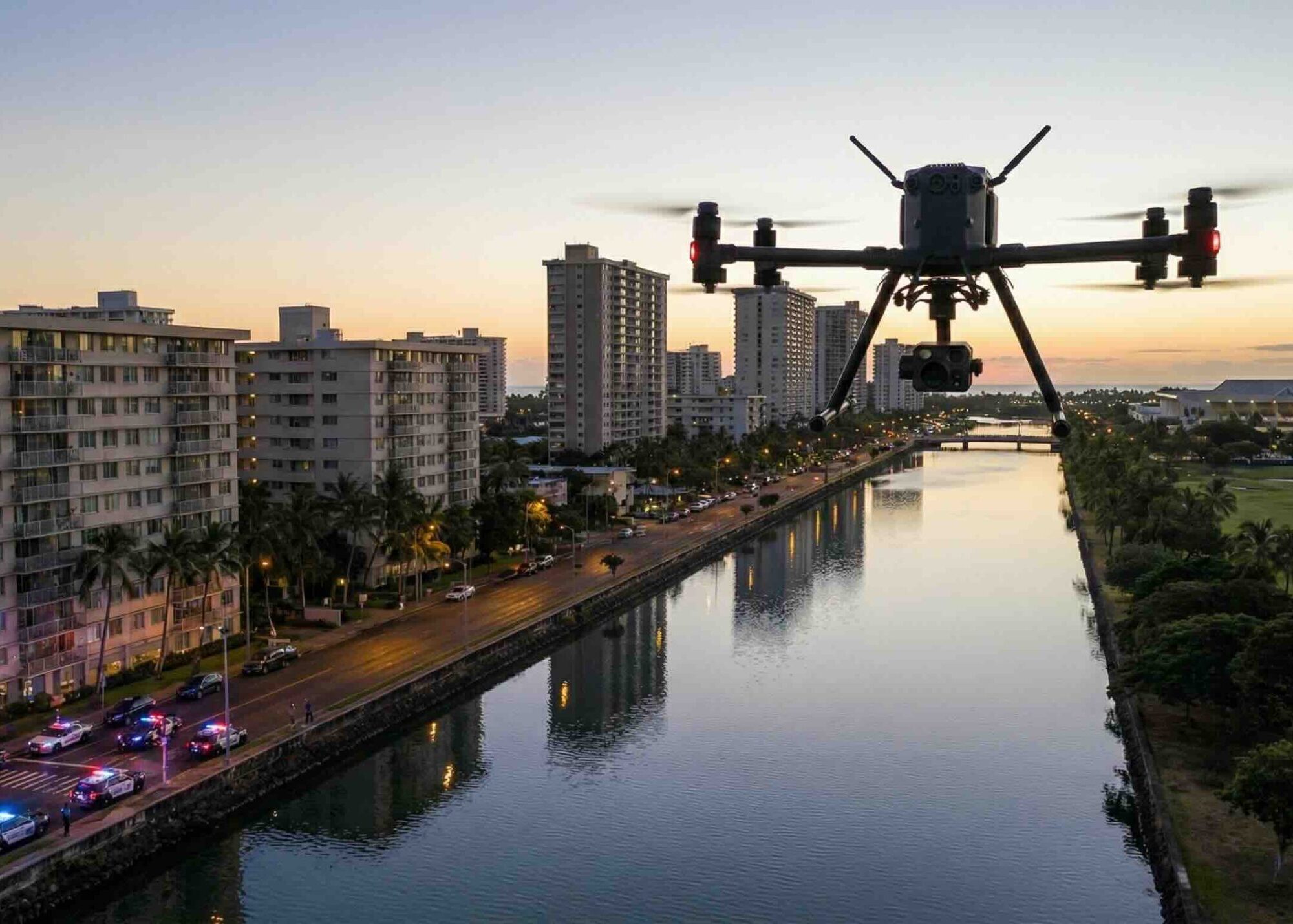
The pitch around drones and security cameras was compelling. The idea is that in a dense, fast-moving environment, a drone could be on scene in roughly 45 seconds, capturing footage well before officers arrive. Layer that on top of calls for more fixed security cameras, more monitoring, and AI, and you start to see a broader shift taking shape. This isn’t just about one tool; it’s about building a much more visible, always-on security and surveillance environment.
I understand why this is attractive. Faster response times, better situational awareness, and safer outcomes for visitors, residents, and officers alike are all legitimate goals. Director Mike Lambert addressed privacy concerns directly, joking that he wasn’t interested in what you had for lunch. I believe him, and I don’t question the professionalism or intentions of the people currently tasked with using these tools. But the harder question isn’t about today’s intentions; it’s about tomorrow’s reach. As cameras, drones, and data collection expand, we should at least pause to ask whether the balance between safety and personal privacy is shifting, and if so, how far we’re comfortable letting it move.
Technology has a habit of moving faster than legislation, and rarely pauses to think through mission creep or unintended consequences. The definition of “appropriate use” slowly expands. More data is stored. More access is granted. While we may all agree with the current intent, that doesn’t mean we’ll always agree with how it’s used. I want safer streets and safer guests in Waikīkī. I’m just not sure I’m comfortable with a more pervasive surveillance environment becoming the price of admission.
The conversation put a small-kine chill down my spine.