

Aloha {{first name |}}!
Sue Kanoho broke the internet. Well, at least our corner of it. Our LinkedIn post on her retirement received 250+ reactions and 60+ comments (and counting), easily our most engaged post to date. That kind of response only happens when someone earns deep respect through decades of great work in Hawaiʻi’s visitor industry. Mahalo, Sue.
A big mahalo to our quarterly title sponsor, Allana Buick & Bers (ABB). While we obsess over the guest experience, ABB makes sure the hard systems actually work. They specialize in mechanical and HVAC CAPEX, helping owners move from reactive fixes to proactive engineering so you can focus on the guests.
In this issue, we look at Hawaiʻi’s growing cost pressures and what the latest numbers are really signaling. We cover the push to bring Michelin to the islands, the legal fight over Turtle Bay’s expansion, and a $227 million Kauaʻi resort now heading to auction. We also explore a shift that could reshape how guests discover and book hotels in the years ahead.
Special for our Subscribers! Our friends at Hawaii.com are relaunching and hosting a free cocktail event, and they are inviting subscribers to attend. It’s at ‘Alohilani on Feb 26! It will be a great time, and spots are limited, so RSVP before it fills.
If you find this useful, please forward it to a friend or colleague. We are building this community one reader at a time.
First time reading? Stop relying on forwarded emails and join the Hui directly. It’s free, and we promise no fluff.
Mahalo for sticking with us!
Let’s dive in.
Mahalo,

Dan Wacksman
Hawaiʻi Hotel Hui Insider Editor-in-Chief 😄

Two Rooms, One Message: The Math Isn’t Mathing
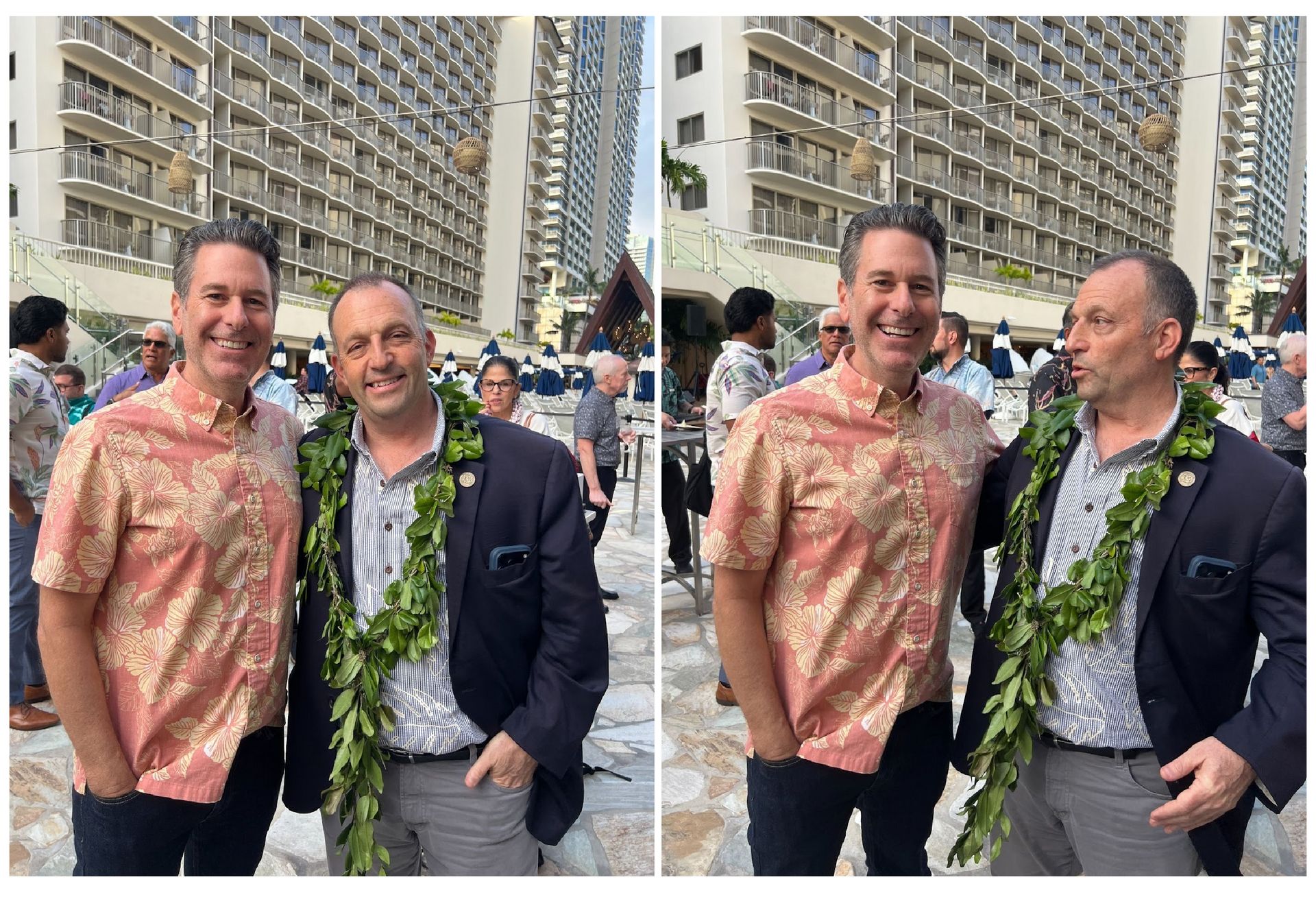
Governor Green preparing to scrap with Dan when asking him to subscribe to HHH (Just joking, he could not have been nicer).
Since the last newsletter, I attended PATA’s Annual Outlook and the AHLA Hospitality Show. Two rooms, different badges, same uncomfortable math.
At PATA, DBEDT’s forecast showed flat arrivals but stronger spending, largely driven by higher-income U.S. travelers. As previously discussed, the recovery is “K-shaped,” with affluent households driving premium travel while middle-income consumers pull back.
Japan remains challenged, and although total air seats are projected to inch up, virtually all of that growth is mainland-driven as international lift continues to erode. 2026 looks more like a holding pattern than a recovery, with any meaningful rebound not expected until 2027 or 2028.
At AHLA, the conversation turned to labor and affordability. We heard that hotel bartenders with tips can make $180K and housekeepers $72K, among the highest in the country, yet still not enough to comfortably live in Hawaiʻi. And for every $1 in wages, operators are layering on another $0.78 in benefits. Only luxury properties are meaningfully outperforming pre-2019 real ADR levels, reinforcing that same “K-shaped” divide we previously covered and also covered at PATA.
Jerry Gibson, Mayor Bissen (Maui), Mayor Kawakami (Kauaʻi), and Governor Green all discussed the housing crisis and doubled down on cracking down on illegal vacation rentals. The number floating around? 30,000 illegal units, with roughly 52 percent with out-of-state owners.
I also learned a new acronym, and I love my acronyms! ALICE, Asset Limited, Income Constrained, Employed. In other words, working, but still struggling.
We can’t just keep raising wages and hope the math works itself out. At some point, affordability, housing, and structural cost pressures have to be addressed. Governor Green acknowledged that directly and said it remains the key focus of his administration.
We love blaming one side or the other. Labor wants too much. Owners are too greedy. The government regulates too much. But hospitality still runs on a three-legged stool: fair wages for employees, fair returns for owners, fair rates for guests.
Often, the problem isn’t the legs. It’s the weight. Housing costs. Tax policy. Insurance. Airlift. When those pressures stack up, the stool doesn’t wobble because one leg failed. It wobbles because the load became too heavy.
You can raise wages. You can push rates. You can trim margins. But if the math keeps deteriorating, something has to give.
BTW – We have a lot of great associations here in Hawaii focused on Hotels and Tourism, the two mentioned in this article are the Hawaii Hotel Alliance (HHA) and Pacific Asia Travel Association (PATA). To see a list of industry-relevant associations, click here.
A Star Is Born… If We Write the Check
Ever wonder why some cities don’t have Michelin-starred restaurants? It’s usually not about talent. It’s about who’s willing to write the check.
Senate Bill 2072 proposes using state general funds to pay Michelin to create a Hawaiʻi restaurant guide. That’s how this works in most markets. Tourism boards or governments fund the guide, Michelin sends inspectors, and suddenly a destination is deemed “world-class.”
Supporters argue it boosts prestige and visitor spending. Critics question whether taxpayer dollars should support a private rating system owned by a French tire company. (Backstory: the Michelin Guide was started by a French tire company in 1900 to encourage people to drive more, travel farther, and quite literally wear down their tires.)
Florida reportedly put up more than $1.5 million to bring Michelin in. Atlanta’s CVB paid around $1 million. Hawaiʻi’s bill leaves the dollar amount blank for now, but the funds would come from the state general fund and be handled by DBEDT. The Hawaiʻi Tourism Authority is supporting the measure.
The real question isn’t whether Hawaiʻi has world-class restaurants. We do.
The question is whether we should be paying for validation.
What do you think?
BTW – If you want to check out my personal Michelin Guide of Oahu, you can find it here, wonder if the legislature will pay me a cool mill for it ;-). If you think I missed any great ones, or have neighbor island recommendations, please let me know!
Digital marketing bumming you out?
-Sponsored-

Digital marketing can be a headache, even the experts at Talk Agency agree.
But the topline revenue growth and bottom-line profit improvement you can get from it definitely do not suck, especially in a soft market.
The problem isn’t your dislike for digital marketing. Its lack of a clear, easy-to-implement strategy and a closed tracking loop that clearly shows MoM improvement, as well as what is and isn’t working.
Talk Agency is ready to roll up its sleeves and dig into your business to build an action plan that delivers results, not promises.
Book your free digital marketing clarity workshop with our founder, Cooper Jitts, to unlock new growth today.
Keep The Country, Waikiki?
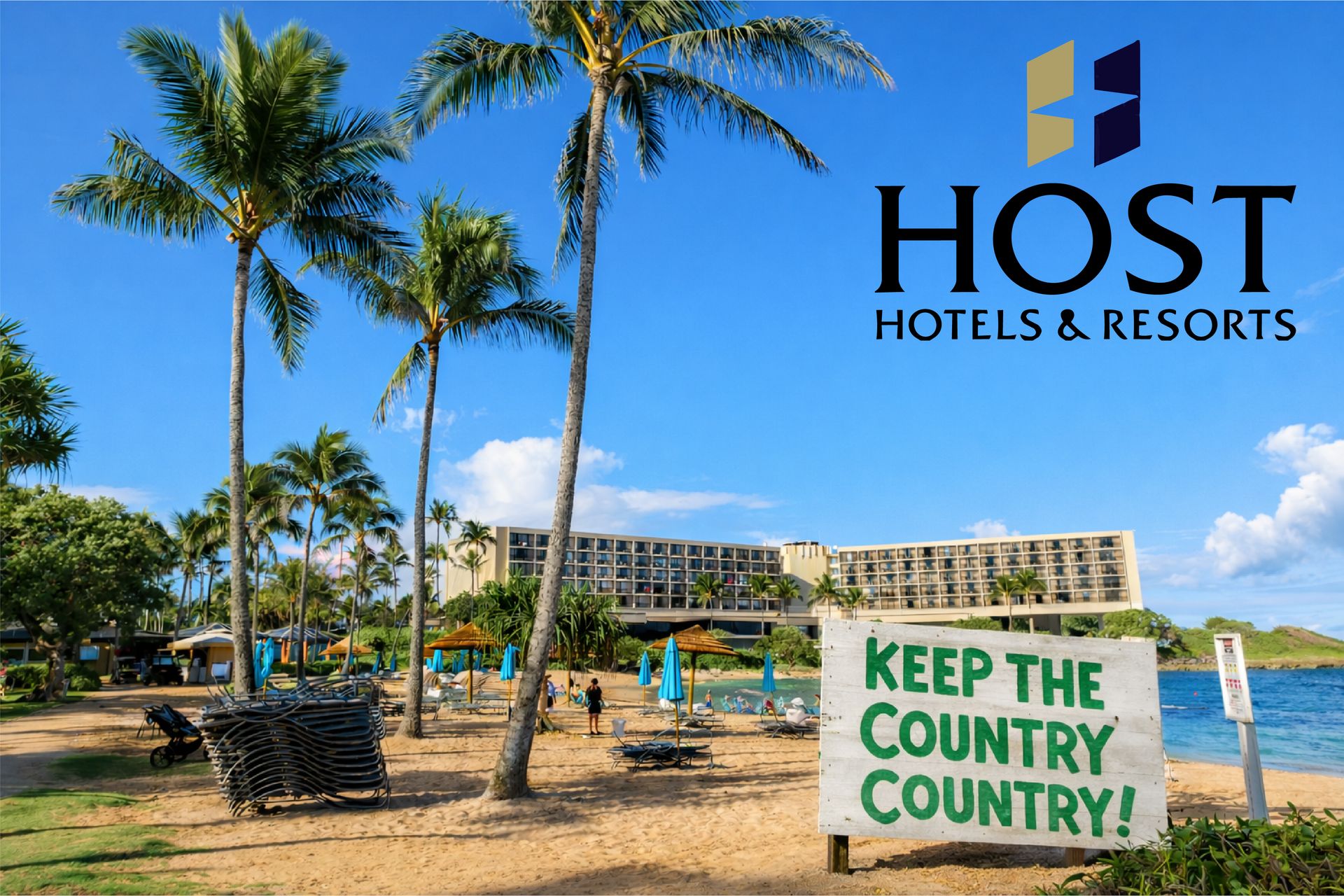
When Host Hotels & Resorts bought Turtle Bay for $680 million in 2024, they weren’t just acquiring a trophy resort; they were buying expansion rights. Host reportedly paid an extra $50 million for a 49-acre parcel of “entitled” land approved for a few hundred additional rooms. Adding that many luxury keys would be a massive financial win for the REIT, but building in 2026 based on a 2013 environmental study is a bold strategy. The City determined the 375-room proposal fit within the scope of a larger 530-unit build-out analyzed in the 2013 EIS (Environmental Impact Statement) and concluded no further review was required. This month, community group Kūpaʻa Kuilima filed to stop the expansion. That $50 million “entitlement” may prove more complicated than originally bargained for.
Utah-based Arete Collective snagged a separate 65-acre parcel nearby for $43 million. They are already moving forward with The North Shore Club, a low-rise resort residential development with roughly 100 units in the early phases and plans for a 250-unit condo hotel down the road.
Since we love back-of-the-envelope math, here it is: the previous owners, Blackstone, purchased the property in 2018 for $332 million and poured a massive $250 million into renovations. Even after that quarter-billion-dollar spend, they exited in 2024 with approximately $768 million in total proceeds, roughly $186 million in profit. Not a bad payday, especially considering they passed the inevitable legal wrangling to the new buyers.
Blackstone did the heavy lifting on the renovations and timed the exit well. Now Host and Arete have to convince a North Shore community that “Keep the Country, Country” can coexist with a few hundred new keys.
A $227 Million Plan. Now at Auction.
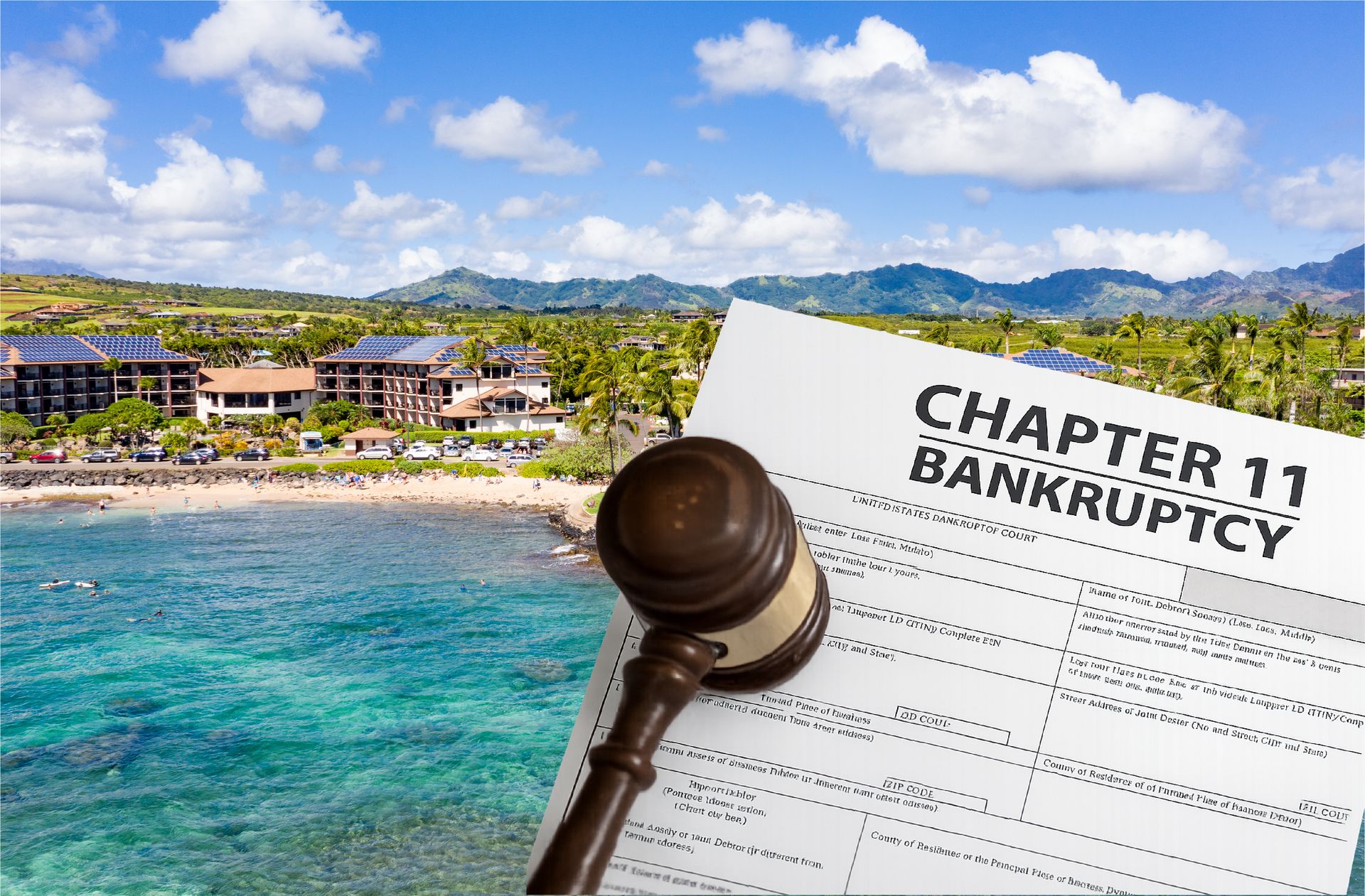
A planned $227 million resort project on Kauaʻi’s South Shore is heading to auction before a single room is built.
Kupono Resort LLC bought 25 acres in Kukuiʻula in 2021 for $24.24 million, with plans for The ʻŌhia, an 85-room hotel and 65 residential units in phase one, followed by another 150 residences. The 2023 debut never happened. After filing Chapter 11 in July, the property is now up for bankruptcy auction, with bids due in April.

The (Maybe Not So) Slow Death of Metasearch
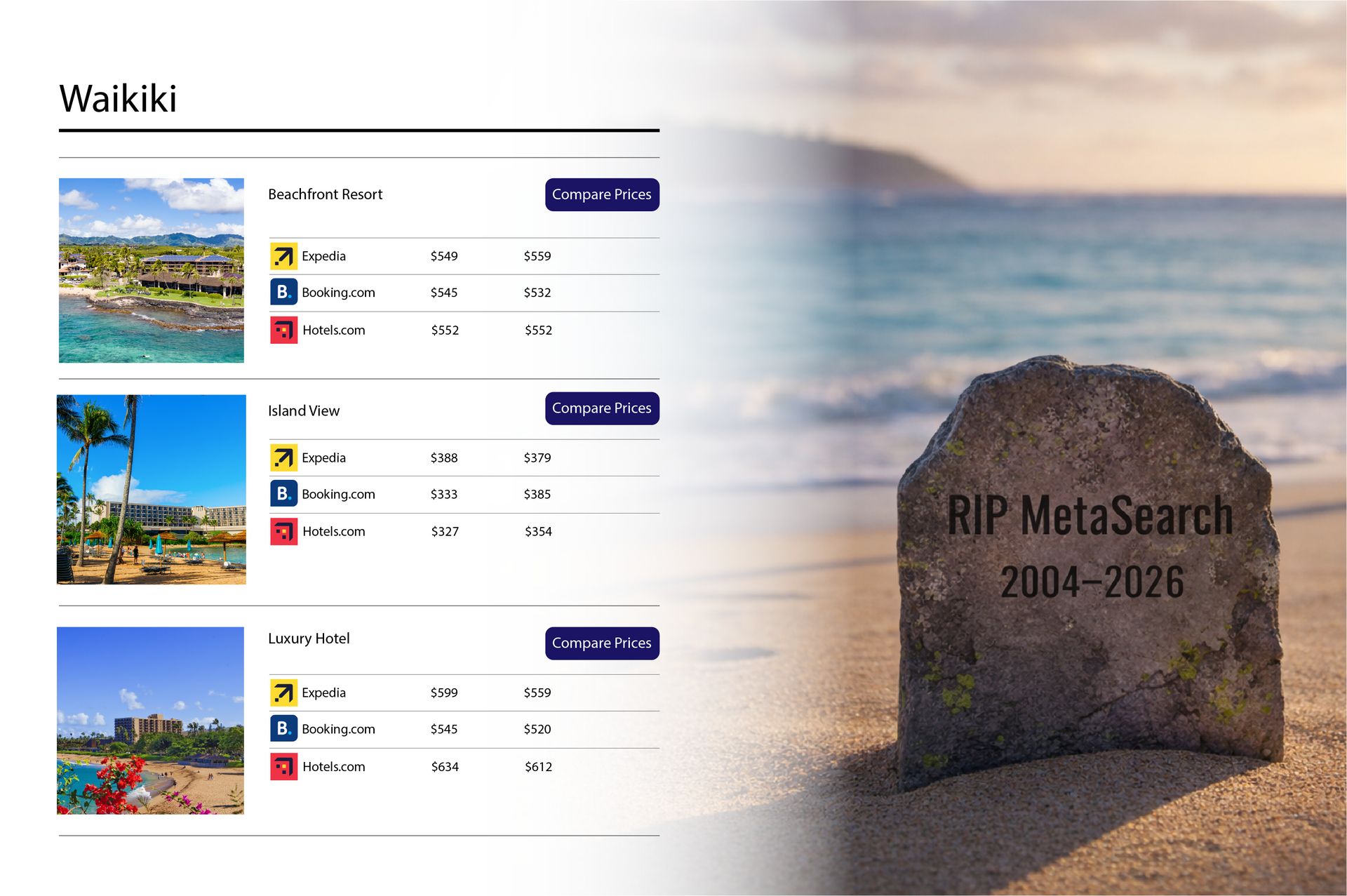
A benefit of aggregating and curating stories every month is that you start to see the throughlines. And here’s one that’s getting harder to ignore: the demise of metasearch may be accelerating.
Trivago, once powered by wall-to-wall TV ads and the creepy “Trivago Guy,” is now pivoting hard into streaming, podcasts, and AI-driven search. Revenue grew 27% in Q4, but EBITDA barely moved. Advertising spend was up 31%. Translation: Growth is expensive. Trivago is now trading at $2.90, way off its peak of $118.
TripAdvisor is fighting a different battle. SEO traffic is declining thanks to Google’s AI Overviews, and even management admits visitors are fading. The company is exploring “strategic alternatives,” which is corporate code for “we’re looking at options.” The stock dropped 18% on earnings and now trades under $10, a far cry from its peak of $110. Not exactly a vote of confidence.
And then there’s Kayak. Founder Steve Hafner is out as CEO after 22 years, ostensibly moving into an AI-focused role at Booking Holdings. Booking already took a $457 million writedown on Kayak, citing lower future cash flows and higher acquisition costs as Google’s AI products reshape search.
Notice the pattern?
Metasearch was built for a world where consumers typed in “hotels in Waikiki” and compared blue links. Today, travelers ask ChatGPT, Gemini, or Claude to build an itinerary, suggest neighborhoods, and summarize reviews. A grid of pay-for-play rates feels like showing up to an AI fight with a flip phone.
Metasearch still drives serious traffic and bookings. But if AI becomes the new front door to travel discovery, the old comparison engine may start to look like a very unsophisticated, very expensive middle layer.
Turns Out Ron Was Right

Skift recently referenced Classic Vacations in an earnings story about its new owner. I somehow missed that the company had been acquired (again) in late 2025, and seeing the name sent me down memory lane.
One of the first acquisition projects I was ever involved in was Classic Vacations (then known as Classic Custom Vacations). It was the early days of online travel, when everyone was trying to figure out how to bring traditional travel companies into the digital world.
It was my first real exposure to acquisition due diligence. On day one, all the VPs, SVPs, and C-suite folks from the potential acquiring company I worked for were on site. After a couple of days, they disappeared. And there I was, a lowly manager, rolling up my sleeves to actually understand how the business operated.
The legendary Ron Letterman, founder and CEO of Classic Custom Vacations, spotted me in the office and invited me to lunch. He skipped the pleasantries. He questioned the deal, the strategy, and whether the folks circling the company really understood what they were buying. He unloaded. I was shell-shocked, but I never forgot that conversation.
We passed on the deal. Expedia didn’t. Continue reading
Drive Revenue at Every Touchpoint with Stayntouch PMS
-Sponsored-

What if every touchpoint could drive more revenue?
Stayntouch PMS helps hotels unlock revenue across the full guest journey, before arrival, at check-in, and throughout the stay, without adding complexity for staff or guests.
Here’s how hotels drive more revenue with Stayntouch:
-
Convert more guests to direct: Digital registration cards and pre-check-in convert up to 15% of OTA guests to direct while creating new pre-arrival upsell opportunities.
-
Monetize every stay: Mobile, kiosk, and staff mobility enable 3-way check-in plus automated upsells for early check-in, late checkout, upgrades, F&B, and add-ons.
-
24/7 incremental revenue: Self-service kiosks and mobile workflows support always-on ancillary and F&B sales without added staffing.
-
Flexible booking, proven ROI: Hourly bookings and dynamic rates monetize unused inventory, with hotels achieving up to 253% ROI in months.
Expedia is at it again, layoffs that is

While hotels struggle to find labor, the OTAs are moving in the opposite direction. Expedia Group is starting 2026 with a familiar move: cutting staff in the name of “operating efficiency.”
Back in April, we reported on Expedia’s 500+ layoffs. A new WARN filing now confirms another 162 layoffs in Seattle. The cuts included numerous senior-level positions.
The message is clear. The platform has been consolidated. Now the focus is efficiency, automation, and fewer layers of expensive “human infrastructure.”
The reductions appear to be Seattle-based, so here’s hoping our crew on the islands remains unaffected.

AI Just Made Marriott and Hilton’s Risk List

For more than twenty years, Marriott and Hilton warned investors about OTAs. This month, they added a new risk: AI.
In their latest annual filings, both brands flagged large language models like ChatGPT as potential new intermediaries that could divert bookings away from direct channels and increase distribution costs. No AI platform is charging commissions today, but we all see where this is heading.
Hilton warned that major tech platforms entering the booking business could push demand away from direct channels. Marriott said AI-powered intermediaries could disrupt how guests plan, book, and pay, potentially eroding brand loyalty and raising costs.
Meanwhile, Google says AI-mode searches are already three times longer and increasingly conversational. More follow-up questions. Fewer clicks. The booking tools are not fully live yet, but discovery is already shifting inside the AI interface.
OpenAI has also begun testing sponsored placements inside ChatGPT trip-planning conversations, allowing travel brands to advertise directly inside the chat before a guest ever reaches a website.
Looks like we have some new, and old but reimagined, gatekeepers. And as my good friend Tim Peter wrote in Digital Reset, gatekeepers are gonna gate.
We spent two decades negotiating with Expedia and Booking.
The next negotiation might be with a chatbot.
Website + Booking Engine. One Seamless Experience.
-Sponsored-

Some call it a website with a booking engine built in. Some call it a booking engine with a website built in. At Tambourine, they just call it one.
In a market as competitive as Hawaiʻi, every click counts. When a guest leaves your site and enters a disconnected booking path, you lose trust (and revenue).
Tambourine eliminates friction by merging the site and the engine into a single, high-converting organism. No confusion, just a direct path to a confirmed stay.

Industry Events
Help celebrate the relaunch of Hawaii.com
-Sponsored-
The team behind Hawaii.com is hosting an evening of food and cocktails to celebrate their recent relaunch. Learn more about their vision as they continue building a trusted platform for travelers and local partners.
|
Date: Thursday, February 26th |
 |
Space is limited; if capacity is reached, you will be added to a waitlist and kept informed as the event approaches.
-
2026 Travel Weekly Hawaii Leadership Forum – April 21, 2026 (Oahu)
-
MHLA 47th Annual Visitor Industry Charity Walk – May 9, 2026 (Maui)
Full list of 2026 Hawaiʻi Events
*If you have industry events to share, please email me at Dan@hawaiihotelhui.com.

Spotlight on Hawai‘i Hospitality Opportunities
-
National Sales Director / VP (Remote) – Hawaiʻi travel platform with surging traffic is hiring a senior ad sales leader to build partnerships across hospitality and tourism. Independent contractor role with uncapped earning potential and real runway.
-
Confidential retained search. Qualified candidates can email dan@sassato.com with a resume and relevant experience.
-
-
Chief Brand and Narrative Officer – HVCB (Honolulu)
-
General Manager – Highgate (Maui)
-
General Manager, Sheraton Waikiki Beach Resort – Marriott International (Honolulu)
-
Director of Revenue Management – Renaissance Honolulu Hotel & Spa (Honolulu)
-
Resort General Manager – Westgate Resorts (Lahaina)
*If you happen to have any job openings, let us know. We will be glad to include them in the newsletter, space permitting; send the job link to Dan@hawaiihotelhui.com.

We are a few weeks into the year, and the inbox is already humming. I say it every issue, but the best part of this project is hearing from all of you. Whether you are correcting my math or schooling me on the nuances of condo boards, your feedback is what makes this a Hui.
Here is a look at what has been landing in the inbox lately.
Praise (The fuel that keeps us going)
-
“Excellent information, Dan, and I love that you share your own feelings and opinions as well. Regardless of whether or not the audience agrees, it’s refreshing to have a perspective, and yours is respected and comes with credentials to back it up.”
-
“Just started reading your newsletter and am really enjoying it.”
-
“Another great newsletter. Thank you.”
-
“Love your synopsis. Thank you.”
The Strategic Pulse
-
“The hiring patterns reveal everything. While most companies debate AI strategy, the real players are investing in teams that can actually execute and deliver at scale.”
-
“World Cup may be the reason for hotels in several host cities knowing that they will miss full year 2026 budgets by the end of June [or] mid-July.”
-
“This Airbnb thing is getting more and more interesting: hotel acquisition… AI… Mahalo for keeping us informed.”
Complexity and Reality Checks
-
“Land: they usually don’t make more of it. Except in the Maldives, where you see huge landfill projects being developed.”
-
“Another complicating factor in condo operations is the presence of rental boards, which often dictate to operators on how rentals should be managed.”
-
“Navigating the intricacies of hospitality law is no small feat: it’s a true endeavor in understanding complex relationships.”
-
“Complexity can lead to confusion, especially in the hospitality industry. Clarity is essential.”
Agree? Disagree? Have a hot take of your own? Fire back at dan@hawaiihotelhui.com, and your response might be featured anonymously in the next edition.

About Us
Hawaiʻi Hotel Hui was started by hotel industry veteran Dan Wacksman, CEO of Sassato, a Hawaiʻi-based consultancy that combines deep local expertise with a global perspective.
Our team brings decades of experience across operations, marketing, revenue, tech, and finance, all aimed at helping hotels and travel companies make smarter decisions and move faster. Whether you need additional expertise, extra horsepower, or just someone who thinks like you and moves things forward, we’ve got you. From local independents to global brands, we show up with a no-nonsense, results-focused mindset. To be blunt: we get sh*t done.
Recent projects include brand transitions, system selection (PMS, CRS, CMS — all the acronym soup), implementations, project management, feasibility studies, training, audits, and everything in between.
A lot of organizations deal with stretched teams, siloed processes, and messy tech stacks that quietly stall important work. We fix that. Happy to chat if this hits close to home.